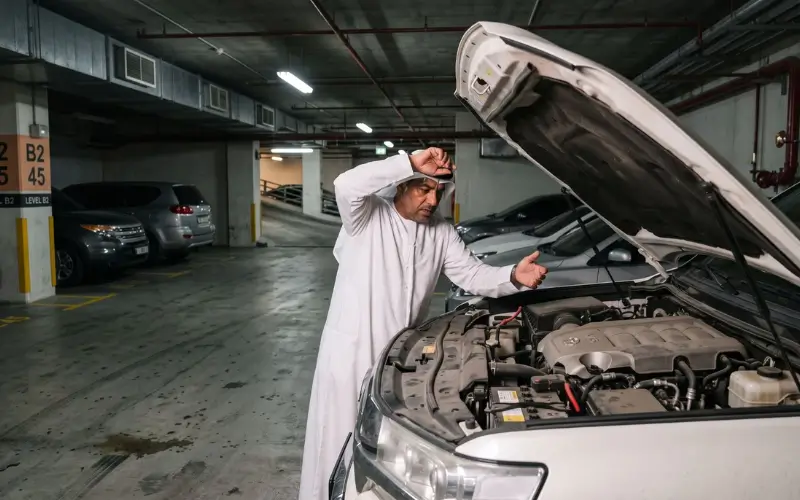
One of the hottest cities in the world is Dubai. People drive their cars to basement parking without knowing to avoid the noontime glare of the sun because they don’t realize the vehicles will still overheat. People drive their cars to basement parking facilities, thinking the sun will not reach their cars, and forget that the sun will still overheat the cars. But do you know that there are numerous ways that parking in the basement can actually be detrimental to your car battery?
One possible reason for your car batteries dying or draining power may be because you are parking in your basement. Car batteries are stressed by the lack of fresh air, high humidity, poor air circulation, and extended periods of not being used at all. All these aspects can affect temperature rise and can cause charging issues from short trips; add up over time, and cause heat from surrounding concrete walls and electrical drain from security systems.
If you are facing battery issues, visiting a reliable battery shop in Dubai, like Battery Zone UAE, can help you find the right replacement or get a proper checkup.
Why Is Basement Parking More Common in Dubai?
Dubai has very hot summers with temperatures reaching above 45 degrees Celsius. This forces most residents/building owners to construct and occupy his/her basement parking space. Discount malls, apartments, and office premises all have multi-level basements, with hundreds of vehicles parked there for hours.
This can prevent cars from receiving sunlight straight on the road, but it presents other issues which car owners may not consider. Knowing what’s going on in the backrooms of parking can make you better equipped to maintain your car and reduce unexpected failures.
Car Battery Performance and Effects of Basement Parking in Dubai. Effect of Basement Parking in Dubai on Car Battery Performance.
Parking in the basement appears to be safe, but presents circumstances of slow deterioration of your battery with no warning signs. It primarily affects your battery as follows:
1. High Humidity Levels Cause Internal Corrosion
The moisture in the air will be trapped in the basement, particularly in places and areas at the coast where the humidity level is high, such as Dubai. This moisture collects around the battery terminal and corrodes it.
Corroded terminals cause a blockage of electrical current from the battery to the car. This results in poor ignition starting and power generation and eventual battery death.
White/green powder may be collecting around the metal connectors. This can be slowed by regular clean-up of the terminals, but if the damage gets deeper within the battery cells, replacement becomes necessary.
2. Poor Air Circulation Builds Up Heat Around the Battery
A lot of people believe that basements are cool, which isn’t necessarily the case in Dubai. The underground parking will have limited ventilation, and heat from a vehicle’s engines and exhaust remains inside the vehicle and on warm concrete walls. This causes the temperature variation in the surroundings of parked vehicles to increase. Car batteries have a strong affinity for heat.
This happens not only with excessive heat, but exposure to moderate heat over long periods as well, weakening the internal plates of the battery and decreasing its charge capacity. A four-year battery might not last until it is eight years old if it’s stored in a poorly-vented basement for most of its life.
3. Long Parking Hours Drain the Battery Slowly
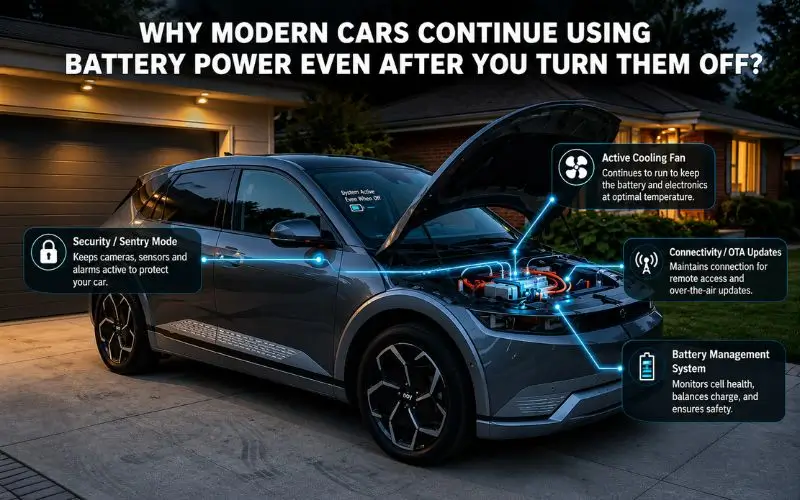
Several people in Dubai park their cars in basements for between eight and twelve hours every day, especially those who work long hours or have lots of travel. Still, small components, such as the clock, the alarm system, and the central locking system, though they are turned off, continue to pull a very small amount of power. This is termed a parasitic drain. This little drain becomes a big drain over hours and days.
The car will gradually lose charge if used infrequently or not driven long enough. A battery that has been allowed to run down often will not hold its charge up to the same extent.
4. Short Drives After Parking Do Not Fully Recharge the Battery
One interesting trend in Dubai is parking a few metres from the basement parking lot, setting off to a local shop or school and then returning the next day. Such runs, however, are not sufficient for the car’s alternator to completely restore the battery charge. Whenever the car accelerates, it generates a lot of power in a furious rush.
If it is a short drive, after five or ten minutes, the battery does not receive sufficient recharging. This repeatedly causes the battery to be partially charged, eventually causing deterioration of the individual cells in the battery and a loss of battery capacity.
5. Temperature Changes Between Parking and Outdoor Driving
Moving a car from a basement parking lot into the hot air in the Dubai outdoors is subject to a rapid temperature change.
The temperature outside in the summer can reach 40-45 degrees, and the basement can be warmer. Frequent acclimatization of batteries to various temperatures places demands on the battery materials.
With these temperature changes, the liquid in the battery “electrolyte” expands and contracts. This can cause the battery to become structurally weak and vent or crack the casing into the battery, indicating that it is time for it to be replaced.
6. Lack of Sunlight and Natural Charging Conditions
If you have a solar panel on your car, they aren’t directly powered by it and will have no direct influence on the charge of the car battery. They are also used to keep the car’s electrical system warm and efficient, even if the car isn’t being driven in the current weather conditions. When cars are parked in basements, they do not benefit from the minimal degree of natural warming that passenger units such as the engine and battery could benefit from, and which helps those systems operate well.
The battery operates in extreme conditions (super cold batteries), including mild winters when the temperature falls in the cooled underground. Cold weather makes the battery use more power than usual in order to start the engine.
7. Electrical Systems Running in Parked Cars
Dubai’s Car Collection includes many cars with such sophisticated features as GPS trackers, remote start, dashcams, additional security alarms, and more. All these systems are operational while the car is parked in a basement. They consume power whenever the engine is not running.
As the car continues to sit, more power is used by these systems. Until the battery drains, the owners are not aware of the toll these extra devices take on their batteries. This can be minimized by disconnecting unnecessary equipment or by using a battery maintainer.
8. Lack of Regular Battery Maintenance and Checks
The convenience of parking in the basement misguides car owners in their safety. People tend not to make regular car checks, especially since the cars are parked in a protected area. People typically don’t realize that their batteries are failing until they can’t start the car. Every 3 to 4 months, batteries need to be checked in Dubai’s circumstances.
The levels of the water must be checked (in non-sealed batteries). If the batteries are weak, the battery terminals are corroded, and they must be repaired immediately. Without maintenance, batteries may fail and cause early battery life impact, which can be prevented with simple, low-cost maintenance.
How to Protect Your Car Battery in Basement Parking?
Some simple steps can significantly extend the life of your battery:
- Determine and regularly drive for longer periods so the alternator is able to properly charge the battery.
- Check the terminals for corrosion, and clean them up periodically.
- Switch off additional electrical appliances while the car is not in use.
- If the car is going to be left for an extended period of time, use a battery maintainer or trickle charger.
- If possible, park in the basement next to areas that are ventilated to minimize heat and moisture accumulation.
- Regularly check the battery at a trusted auto shop, particularly before and after the summer.
When Should You Replace Your Car Battery in Dubai?
With all the rigors and conditions of driving in Dubai and aridity, most of the car batteries last for just 2 – 4 years. If the engine in your car starts slower than normal, the headlights appear dim, or the battery warning light illuminates, then it’s a sign of trouble with the battery.
Don’t let your vehicle break down in a parking lot. Unless a battery check is done annually, there’s no harm in it. Install a battery that is >3 years old in the system; if you are not sure, you should have it professionally tested to determine if there is still sufficient life left in it.
Conclusion
Compared with direct sun exposure, a round-the-clock vehicle leak check when the car owner parks it in the basement in Dubai poses another set of problems for the car battery. Humidity, lack of air circulation, extended hours in cars, brief commutes, and excessive power demands all impact battery life sooner than you think.
The battery can be avoided, leaving one stranded with a dead battery, due to regular maintenance, proper driving practice, and early testing. Don’t put off checking or replacing a weaker battery.
All you need to do is pay a bit of attention and ensure your vehicle performs its required functions in Dubai’s challenging environment.
Must Visit: Boulevard Plaza Tower 2: Office Spaces, Location, Facilities & Rent