



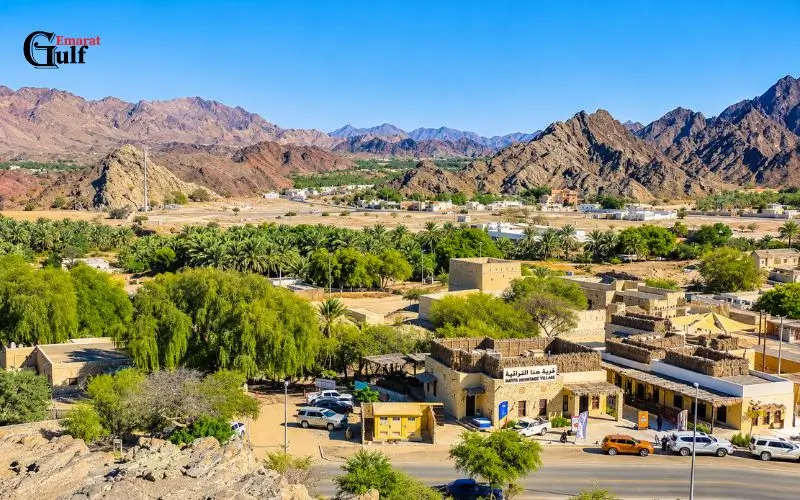
Hatta Heritage Village is a restored historical village in Hatta, Dubai and is a great example of traditional Emirati architecture and the way life was in the old days. It reopened in 2001 and is a free-entry attraction. It features traditional stone houses, a number of watchtowers, a mosque and a host of exhibits relating to the traditional way of life. You can wander around the village and get a real feel for the history of the area, learn about traditional farming and irrigation and the way people used to live in the Hajar mountains. It’s situated right next to Hatta Fort, Hatta Dam and Hatta Hill Park, so it is one of the more popular stops on the Hatta cultural circuit.
Hatta Heritage Village Location
The historic settlement is in Hatta, an inland district of Dubai in the eastern part of the UAE. It’s situated in the Hajar mountains, surrounded by rocky hills, traditional agricultural land and date palm plantations.
Its mountain setting was crucial to the development of the original settlement. Access to water, defensible ground and good agricultural land all contributed to the community being able to establish itself in the area.
The village is quite close to a number of other attractions (Hatta Fort, Hatta Hill Park and Swan Lake), so it’s very much possible to visit all of those on the same trip without having to go back to central Dubai.
Location details:
- Area: Hatta
- Emirate: Dubai
- Country: United Arab Emirates
- Mountain range: Hajar Mountains
- Nearby landmark: Hatta Fort
- Entry fee: Free
For navigation purposes, search for the name of the attraction on Google Maps or use the official directions provided via the Dubai Municipality website.
History of Hatta Heritage Village
Hatta has a long history of human occupation with archaeological evidence of habitation going back many thousands of years. The wider archaeological picture includes remains from the Bronze Age, the Iron Age and the later Islamic period.
As per the UAE National Cultural Map, the area has a history stretching back some 2000–3,000 years, with Hafit Period tombs dating from 3200–2500 BC. This clearly shows the mountain area as having been a place of settlement, of agriculture and of community.
The settlement is a later phase in this cultural development and the buildings and surviving architectural features clearly illustrate how the inhabitants built their houses, protected their communities and utilized the very limited natural resources available to them.
Traditional Mountain Life
Historically, the families in Hatta were agricultural, based on livestock, agriculture and local trade. Date palms were a major component of the agricultural economy and the mountain water was used for both farming and for domestic purposes.
Traditional housing was built from materials that the inhabitants could get locally. Stone, clay, mud and palm materials were all used in the construction of the houses to suit the local environment.
The settlement also had defensive works, as it was absolutely essential to the survival of the community to protect the homes, the agricultural resources and the water supplies.
Restoration and Public Opening
The original settlement slowly lost its status as a residential centre as the modern buildings and infrastructure of Hatta developed.
To preserve its cultural value, the Dubai Municipality carried out restoration work and officially reopened the site to the public in 2001.
The restoration has gone a long way to preserving the traditional architectural features and has given visitors the opportunity to get a feel for the way of life of the earlier Emiratis.
Today it’s recognised as a significant cultural landmark in Dubai.
What to See Inside the Village
The site contains some 38 structures as per the UAE National Cultural Map. These are traditional buildings, defensive towers, historic religious buildings and community buildings.
Each one of them represents a different facet of life in the old mountain settlement.
1. Traditional Stone Houses
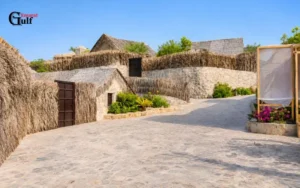
The traditional houses are probably the most interesting aspect of the site. They’re a perfect example of people building their own homes out of local materials rather than using modern concrete and steel.
Stone and mud were key components of the building structure, with palm trunks, fronds and the like forming part of the traditional building materials.
The houses also give us a good indication of the practicalities of mountain living. The layouts are very simple and the way they’ve been built is entirely in keeping with the resources available and the environment in which they were built.
Visitors can look at the architecture and get a feel for how the older residential communities arranged their living spaces.
2. Hatta Fort
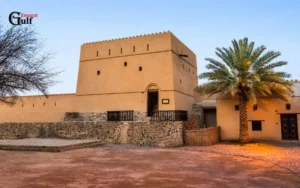
Hatta Fort is one of the most iconic historical sites in the area and was constructed in 1896 at the behest of Sheikh Maktoum bin Hasher Al Maktoum.
The fort was originally a defensive and residential installation. It had a watchtower on top, which enabled the inhabitants to keep a lookout over the countryside and spot any approaching threat.
The building is of mountain stone, mud brick, and traditional roofing. The 11 m-high watchtower is a key architectural feature.
The fort was restored in 1995, which has been very effective in preserving its historic appearance.
Anyone interested in traditional military architecture should take particular note of the construction and defensive design.
3. Historic Mosque
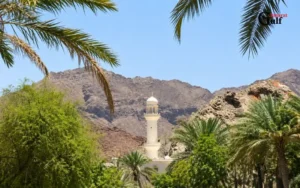
The mosque is of course the very heart of the religious and community life of the earlier inhabitants.
The National Cultural Map identifies a mosque in the settlement which is over 200 years old. The architecture in the area shows how religious buildings were an integral part of the traditional mountain communities.
The mosque is a very simple design, reflecting the materials and the methods of construction that were available at the time.
It’s also a very important reminder that the religious buildings were the focal point for the local community.
4. Traditional Watchtowers
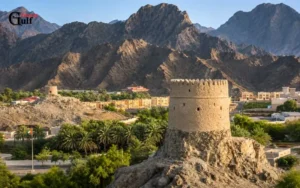
Watchtowers were a vital part of the security of the older settlements. They were situated on high ground and thus enabled the inhabitants to keep a watchful eye on the approaches, the farmland and the surrounding mountains.
The wider Hatta area does have some historic watch towers dating from the late 1800s.
The UAE National Cultural Map also states that the area was historically known as Al-Hajarein (The Two Rocks). That’s a reference to the mountains surrounding it, with defensive towers on the peaks of the mountains.
These examples show how the geography of the area would have dictated traditional patterns of settlement.
5. Traditional Majlis and Household Displays
Traditional community spaces give you an insight into how families and neighbours would have got on in the past.
A majlis was the place where people would come to welcome guests, discuss community issues and maintain the social fabric.
Historic displays throughout the heritage attraction help to illustrate the domestic arrangements, the traditional ways of doing things and the day-to-day responsibilities of the residents.
The wider heritage collection also includes photographs, traditional objects, tools and all sorts of other things associated with earlier mountain life.
Hatta Falaj and Traditional Irrigation System
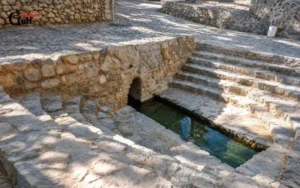
The classic Falaj irrigation system is one of the most significant examples of historical engineering in Hatta.
A falaj is a traditional water system that takes water from a natural source and delivers it to the farmland and to the villages. They were absolutely vital to the communities in which they operated, where rainfall was sparse and water had to be managed.
The Hatta system links the mountain water sources to the surrounding agricultural areas and was used to supply both the local population and the date palm farms.
As per the UNESCO Tentative List documentation, the wider Hatta archaeological landscape contains a traditional underground water channel running some 560m from the mountain into the valley. The irrigation system is known to be of the first millennium BCE.
The system shows how earlier communities developed practical ways of managing their natural resources.
Visitors can go to the adjacent Al Sharia agricultural area to get a feel for the interplay between traditional agriculture, water distribution and mountain settlement.
Important: The UNESCO documentation is about the wider Hatta Archaeological Landscape. Hatta’s inclusion on the Tentative List does not in any way mean that it has been inscribed as a UNESCO World Heritage site.
Hatta Heritage Village Timings and Entry Fee
Planning your visit will help to avoid any confusion about opening times and entrance fees.
As per the Dubai Municipality, the attraction is open from 7.30 AM to 8.30 PM and entry is free.
The official Hatta tourism website has a more detailed weekly schedule.
| Visitor information | Details |
| Saturday to Thursday | 7:30 AM–8:30 PM |
| Friday | 2:30 PM–8:30 PM |
| Entry fee | Free |
| Location | Hatta, Dubai |
| Recommended visit | 1–2 hours |
These are the published timings from the official tourism website. As always, it’s worth checking that the site is operating as normal prior to your visit, especially around public holidays, during Ramadan or in the event of any special occasion.
There’s no general admission ticket required for the attraction.
Also remember that the other paid activities in Hatta (kayaking, accommodation, adventure experiences, etc.) all have separate charges.
How to Reach Hatta Heritage Village
Visitors can get to the mountain area by car or by public transport. The best mode of travel will of course depend on where you’re starting from, your budget and what you’re planning to do in the area.
By Car from Dubai
Driving is the most convenient option for visitors who wish to visit a number of places in one trip.
The trip from central Dubai takes about 90 minutes (again, depending on traffic and where you’re starting from).
The Sharjah–Kalba route via E102 is the one normally used when heading towards Hatta. It’s a route that gives you the chance to see the desert and mountain scenery all around.
Before starting your journey:
- Check your vehicle’s fuel level.
- Use a current navigation app.
- Check the road conditions prior to setting off.
- Take your drinking water with you (especially in the warmer months).
- Follow the road signs and local road rules.
The distance and travel time can vary depending on your departure point.
By Public Bus
Public transport is another option for people travelling from Dubai without a private vehicle.
The RTA operates the H02 Hatta Express between Dubai Mall Bus Station and Hatta Bus Station.
The published service details include:
- Route: H02
- Departure point: Dubai Mall Bus Station
- Destination: Hatta Bus Station
- Operating hours: 7:00 AM–7:00 PM
- Frequency: Every two hours
- Fare: AED 25 per passenger per journey
From Hatta Bus Station, you can take the local tourist bus.
The RTA timetable currently lists route H04 as the circular service connecting Hatta Bus Station with four major attractions:
- Hatta Wadi Hub
- Hatta Hill Park
- Hatta Dam
- The heritage attraction
The published H04 fare is AED 2 per passenger per stop, with service running from 7.00 AM to 9.00 PM at 30-minute intervals.
Check the latest timetable prior to travelling, as the public transport timetable can change.
Nearby Attractions to Visit
One of the benefits of visiting this historic town is its proximity to a number of cultural and outdoor attractions.
You can arrange a full day out by combining historical sites with mountain views, recreation and trips to the adjacent parks.
Hatta Hill Park
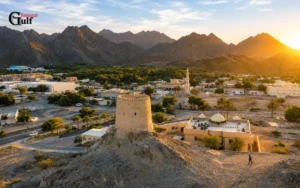
Hatta Hill Park is a popular outdoor park situated on elevated mountain ground.
The park opened in 2004 and has a range of recreational facilities including play areas for the children, running tracks and sports fields.
It’s perched high up, so you get lovely views over the Hajar mountains and the town.
Families can go out and about, and there are plenty of viewpoints for photographers and visitors.
Hatta Dam
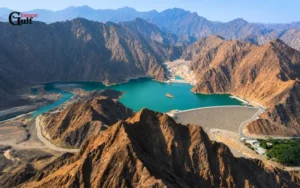
Hatta Dam is one of the most well-known natural attractions in the district.
Its reservoir is set amongst rocky mountain slopes and provides excellent views all year round.
Kayaking and other water-based activities are available via local operators (subject to operating conditions and seasonal arrangements).
Visitors can enjoy the scenery, take photos and just hang about the reservoir.
Swan Lake
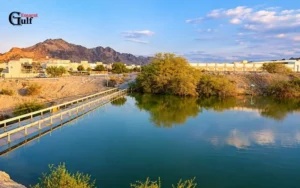
Swan Lake is a small recreational facility adjacent to the historic settlement.
It’s a very peaceful place to just watch the ducks and the other birds around the water.
The location is ideal for families wanting a relaxed stop en route.
The official Hatta tourism website also lists the swan-shaped pedal boats as an option (at an additional cost).
Hatta Watchtower and 360 Observatory
The Hatta Watchtower (also known as the Hatta 360 Observatory) is another interesting historical site.
The tower is from 1880 and was originally a defensive tower.
Today, its position is such that it’s a very good spot from which to enjoy the mountain views.
Visitors are advised to check access arrangements before setting off on the trails around it.
Hatta Honey Bee Discovery Centre
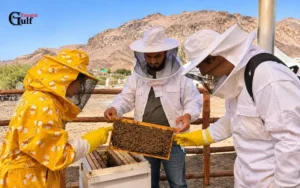
The Hatta Honey Bee Discovery Centre is an educational centre focused on honey and beekeeping.
Visitors can find out all about bee colonies, honey harvesting and the role of bees in the natural environment.
The attraction also has information on modern beekeeping and local honey production.
It’s a very good stop for families and visitors who are into agriculture and the countryside.
Restaurants Near Hatta Heritage Village
There’s a range of dining options in and around the main Hatta area. Some of the restaurants serve up traditional Emirati food and others serve international cuisine.
Al Hajarain Restaurant
Al Hajarain is very much the convenient one, as it’s right in the heart of the historic attraction.
The restaurant is all about local Emirati food and also has a range of other cuisines on the menu (Indian and Italian, to be specific).
The menu comprises lamb and chicken machboos, biryani, Arabic grills, pizzas and pasta.
It’s a perfectly viable option for those who just want to eat without having to go too far from the historic buildings.
- Location: Within the heritage attraction
- Cuisine: Emirati, Indian and Italian
- Contact: +971 50 696 0331
- Tanoor Restaurant
Tanoor Restaurant
It’s well known for its traditional tandoor-style meat and chicken dishes. If you’re in the area looking for some grilled food, then it’s definitely worth a visit.
Check current opening times and menu availability prior to going.
Food Trucks at Hatta Wadi Hub
Food Trucks at Hatta Wadi Hub
These are ideal for visitors out and about doing the outdoors who just want a quick meal or a snack.
The official tourism website has three food trucks listed at the hub (although of course the selection may vary).
Best Time to Visit
The cooler months are generally the more comfortable time of year to be out exploring Hatta’s outdoor attractions.
Oct to April is the sensible time to do a mix of historical sightseeing with the various outdoor pursuits (hiking, cycling, kayaking, etc.).
In winter, you can obviously spend a lot more time wandering around the historic buildings and the surrounding mountain views.
Summer visits are also an option, as the attraction has published operating hours that go into the evening. The daytime temperatures can be quite high, though, so visitors will need to plan their outdoor activities accordingly.
Recommended visiting periods:
- Oct to Nov: ideal conditions for sightseeing and getting out into the countryside.
- December to February: ideal for family getaways and longer outdoor trips.
- March to April: good for combining heritage visits with mountain pursuits.
- May to September: consider evening visits and avoid long periods of being outdoors during the peak heat.
Weather can be an issue, so it’s worth checking the forecast before you go.
Visitor Tips Before You Go
A bit of preparation will go a long way to making the visit more comfortable and will, in fact, enable you to get much more out of the experience.
- Wear comfortable shoes: You will spend time walking between traditional buildings and outdoor areas.
- Carry drinking water: This is particularly important during warmer weather.
- Bring a camera: The traditional architecture and surrounding mountain landscape provide excellent photography opportunities.
- Respect the historic structures: Avoid touching fragile displays or entering restricted areas.
- Dress appropriately: Choose comfortable, respectful clothing, particularly when visiting religious structures.
- Check opening hours: Confirm the schedule before setting off, especially on Fridays and public holidays.
- Plan nearby attractions: Hatta Dam, Hill Park and Swan Lake can make the trip more enjoyable.
- Allow enough time: Around one to two hours is a reasonable starting point for exploring the main heritage area.
Allow plenty of time (one to two hours is a good starting point) to explore the main heritage area.
Families travelling with young children should be on the lookout for the younger members of the group wandering around the old buildings, the steps and the outdoor pathways.
Is Hatta Heritage Village Worth Visiting?
Yes, the attraction is definitely something worth including on a Hatta visit, especially for those interested in Emirati history, traditional architecture and the preservation of culture.
Its key strength is the opportunity to see how the earlier mountain communities organised their homes, their agriculture and their defences.
Not like a modern-day entertainment destination at all, it’s all about the historic buildings and the lives of the people who came before us.
Free admission is another benefit. You can go to the attraction without paying the normal entrance fee and then combine that with the other natural and recreational areas in the vicinity.
It is especially suitable for:
- Families looking for educational visits.
- Tourists exploring traditional Emirati culture.
- Photography enthusiasts.
- Students studying regional history.
- Visitors coming in on a day trip from Dubai.
- Travellers interested in traditional architecture.
People looking primarily for adventure activities will probably end up spending more time at the Hatta Wadi Hub or the Hatta Dam.
Final Thoughts
Hatta Heritage Village is a great place to go if you’re interested in the traditional architecture, history and the cultural traditions of the Hatta area. You get to see the restored houses, the historic watchtowers, the mosque and the various heritage displays which give a real insight into how people lived in the Hajar Mountains. It’s all free to enter and it’s located very close to a number of other attractions (Hatta Fort, Hatta Dam, Hatta Hill Park), so it makes a very worthwhile day trip from Dubai. As always, check the current opening times before you go if you’re planning a visit.
Read Also: Mamzar Beach Park Dubai: Timings, Entry Fees, Facilities and Things to Do
Quranic Park Dubai: Location, Timings, Entry Fee and Attractions
Hamidiya Park: Location, Timings, Facilities & Things to Do
Frequently Asked Questions
Where is Hatta Heritage Village located?
It’s in Hatta in the Emirate of Dubai, UAE, surrounded by the Hajar mountains.
Is entry to the village free?
Yes, Dubai Municipality offers free admission for visitors.
What are the opening hours?
The published timetable is 7.30 AM to 8.30 PM from Saturday to Thursday and 2.30 PM to 8.30 PM on Friday.
How old is Hatta Heritage Village?
The wider Hatta area has archaeological remains dating back over 3,000 years. The heritage site itself has buildings and features from later periods.
When was the village restored?
Dubai Municipality oversaw the restoration work and it officially opened to the public in 2001.
What can visitors see inside?
Visitors can also explore traditional houses, historic buildings, the defensive towers, a historic mosque and displays on traditional mountain life.
How can I reach Hatta from Dubai by bus?
Take the RTA H02 Express from Dubai Mall Bus Station to Hatta Bus Station. The published fare is AED 25 per journey, followed by a local tourist bus service.
Which attractions are near the village?
Nearby attractions include Hatta Fort, Hatta Hill Park, Swan Lake, Hatta Dam, Hatta Watchtower and Hatta Honey Bee Discovery Centre.