



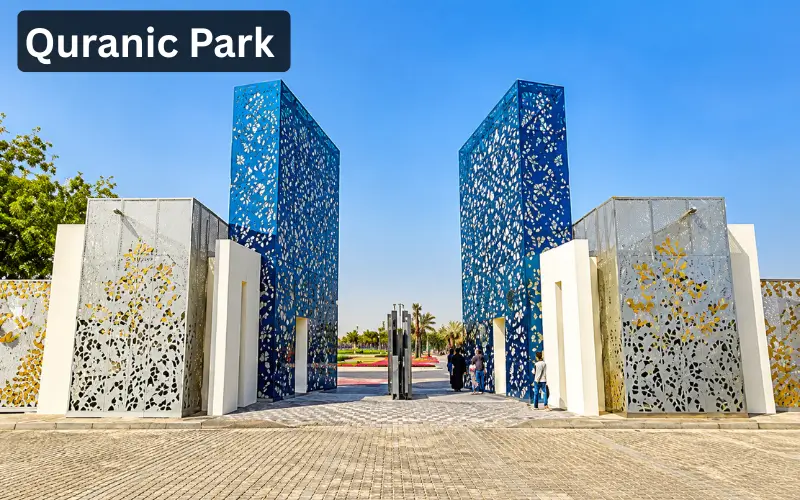
Quranic Park is a public park dedicated to plants, stories, and references from the Holy Quran located in Al Khawaneej, Dubai. It was opened in 2019 and includes landscaped gardens, botanical exhibits, and interactive exhibits that educate visitors about Islamic heritage. A family-friendly park, ideal for visitors and those seeking knowledge about the plants in the Quran and prophetic stories in the open air.
The highlights of the site are the Glass House, the Cave of Miracles, the twelve orchards, and the lake of the Prophet Moses (peace be upon him). The outdoor park is open to the public, and the Glass House and Cave of Miracles are open for a fee. The grounds are open, and visitors can enjoy the gardens, educational displays, and open areas at no cost to view every attraction.
Quranic Park Quick Facts
| Detail | Information |
| Name | Quranic Park |
| Location | Al Khawaneej, Dubai, UAE |
| Opened | 2019 |
| Managed by | Dubai Municipality |
| Total area | Approximately 64 hectares |
| Outdoor entry fee | Free |
| Glass House and Cave of Miracles | Paid attractions |
| Published standard attraction hours | 9:00 AM–9:00 PM |
| Main features | Twelve orchards, greenhouse, cave exhibits and lake |
| Suitable for | Families, children, tourists and students |
| Recommended visit | Around 2–3 hours |
The hours shown are for the park’s attractions and should be confirmed prior to visiting. There may be special arrangements during Ramadan as well as during public holidays or temporary closures.
Quranic Park Location
The location of Quranic Park is in Al Khawaneej, Dubai, which is away from the main attractions of the city located around Downtown Dubai and Dubai Marina. It is centrally located and can be easily accessed by the residents of eastern Dubai as well as tourists looking for an alternative side of the city.
The park is accessible by road, and a car or taxi is available for the family. For those travelling by public transport to Dubai, travelers can always refer to the updated Dubai RTA services and connections to find the best route, depending on where they are coming from and the available bus services.
Getting There
The park can be accessed by car, which eliminates the need for multiple transportation modes. Before leaving the park, enter the park’s name into a navigation app and see how long the journey is expected to take based on the current traffic situation.
Public transport could be a subway ride and then a bus or taxi. Verify the entire route before getting on the bus, rather than taking a guess or figuring it out by an older bus number. A taxi direct service might be more convenient around the time of the visit for visitors travelling with children or older relatives.
Opening Hours
According to the official Dubai Public Parks ticketing portal, the following listed time for the park’s ticketed attractions is the standard operating time: Monday to Sunday, 9:00 AM to 9:00 PM. During special times, however, they may be permitted to operate under different conditions in park grounds and indoor attractions.
| Day | Published attraction hours |
| Monday | 9:00 AM–9:00 PM |
| Tuesday | 9:00 AM–9:00 PM |
| Wednesday | 9:00 AM–9:00 PM |
| Thursday | 9:00 AM–9:00 PM |
| Friday | 9:00 AM–9:00 PM |
| Saturday | 9:00 AM–9:00 PM |
| Sunday | 9:00 AM–9:00 PM |
These are normal published hours and not a guarantee of access to all facilities during the year. Please check the current schedule before travelling, as it can be subject to changes during Ramadan and public holidays.
Entry Fee and Tickets
Visitors can stroll around the gardens and walking areas of the outdoor park for free, without needing to be admitted to the indoor section to view the exhibitions. There are individual ticket systems for the Glass House and Cave of Miracles.
Dubai Administrative Resolution No. 316 of 2018 has introduced a fee of AED 10 per person for the two covered attractions. The number of attractions may be listed separately in the current visitor information and ticket listings, with a price of AED 5 per attraction; visitors should check the price of the attractions they choose before paying.
| Attraction | Entry information |
| Outdoor park | Free |
| Glass House | Paid entry |
| Cave of Miracles | Paid entry |
| Children under 2 | Current ticket portal lists free entry |
| Children under 3 | Exempt under the 2018 fee resolution |
| Eligible visitors with disabilities | Exemption under the resolution, including two companions |
The age difference between the descriptions is due to the original fee resolution wording and the published ticketing information. Please refer to the latest regulations when making reservations. Persons with disabilities should check with park administration prior to visiting for any identification needs.
Main Attractions
Glass House
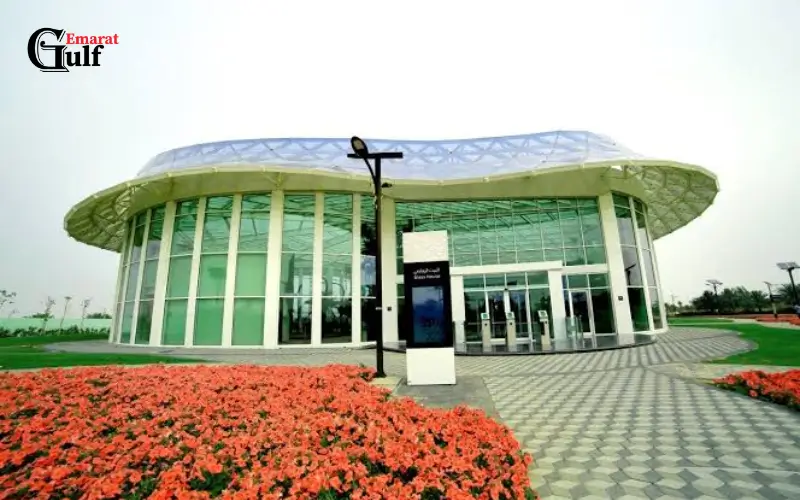
One of the educational highlights of the park is the Glass House. It features plants that need a controlled growing environment, such as plants mentioned in the Quran and Sunnah.
The plants are kept in a greenhouse where the climate and watering are controlled. The plants are explained in the informational displays, enabling those visiting to relate the plant collection to Islamic heritage.
Cave of Miracles
The Cave of Miracles is an interactive exhibit with multimedia presentations and visual effects to share prophetic miracles described in the Holy Quran. According to Dubai Municipality, there are seven exhibits in the attraction.
This experience offers an educational introduction to selected stories in the Quran. The displays can be used as tools for conversation with children as part of their family gatherings, and the stories continue to be explored by the visitors through their own references to the Quran.
Twelve Orchards
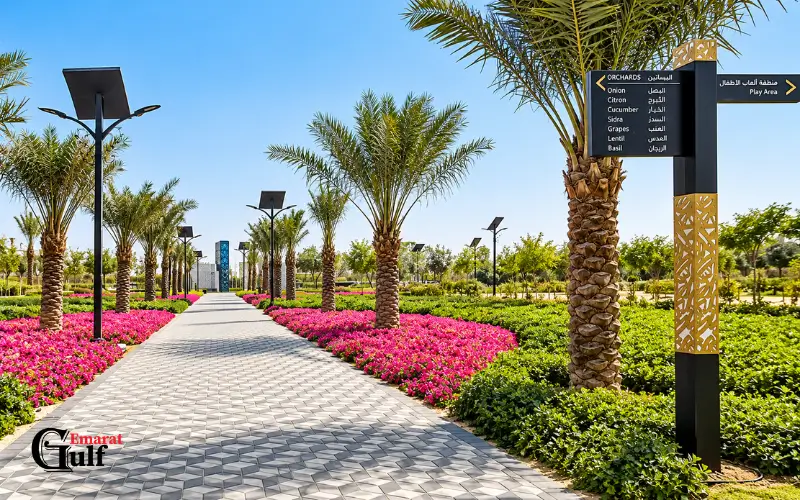
There are twelve orchards, with trees and plants referred to in the Quran in the outdoor grounds. The planting sites link the theme of religion to agriculture, food and environment within the park.
The plants, which are represented throughout the park, include dates, olives, figs, grapes, pomegranates, bananas, garlic, onions, lentils, wheat and ginger. There are informational kiosks that provide information on selected plants, their uses, and the Quranic verses related to them.
Moses Lake
The lake is a symbol of the story of the prophet Moses (Musa a.s.) and the splitting of the sea. It offers an element of visuality in the park’s landscaped area, and bridges the gap between the outdoor space and one of the stories of the Quran that the park is presenting.
The lake is part of the walk and can be experienced within the surrounding gardens. Children should be closely supervised near water and always adhere to the posted water safety information.
Children’s Play Areas

There are two children’s play areas planned for the park. These spaces bring a recreation aspect to a place that is mostly devoted to gardens, plants, and learning displays.
It is important for parents to review the appropriateness of the equipment for their child’s age and to monitor children when they are playing. The play areas can also be used as a transition area from visiting the greenhouse to the exhibition areas.
Solar Trees and Walkways
The park also features solar-powered infrastructure, such as specially designed solar trees and illuminated pathways. Additionally, the park includes solar-powered infrastructure, including specially designed solar trees and illuminated pathways. The use of modern technology and Islamic-inspired designs in these installations is a testament to the project’s innovative approach.
The solar lighting can be used after daylight hours to provide light in the outdoor area, and the landscaping features a walking path and garden viewing areas. These features are not designed as separate attractions that require a ticket to visit the park, but rather as part of the overall design of the park.
Plants Mentioned in the Quran
The park’s educational mission has at its heart the botanical collection. These presentations are not just ornamental but are paired with a Quranic quote for each plant and inform about its importance in food, agriculture, and traditional use.
| Plant | Common association |
| Date palm | Dates and food |
| Olive | Olive fruit and oil |
| Fig | Edible fruit |
| Grapes | Fresh fruit and raisins |
| Pomegranate | Fruit and seeds |
| Banana | Edible fruit |
| Ginger | Culinary use |
| Pumpkin | Food and cultivation |
| Cucumber | Vegetable cultivation |
| Lentils | Staple food crop |
| Wheat | Grain and food production |
| Garlic | Culinary use |
The table is not an exhaustive list of the park’s collection, but lists common examples. Availability of plants may change with growing conditions and maintenance. The visitor can observe individual species by reading the information boards and their Quranic references.
The educational program also fosters an awareness for the visitor of the value of plants in everyday life within the park. The experience is part of food production, cultivation, and the interactions between people and the natural environment.
Best Time to Visit
The outdoor grounds tend to be more pleasant to stroll about in the cooler months of the year (November through March). Visitors looking to explore the gardens for longer periods of time without the harsh midday sun can also consider visiting early in the morning or late in the afternoon.
When it is warm out, plan carefully and take breaks as necessary. If you would like to keep the outdoor element of your trip to a minimum, the Glass House and Cave of Miracles can be the primary focus of the visit.
Visitors looking for a more relaxed experience may prefer to choose the weekdays, while weekends are great for a family outing. Numbers of visitors fluctuate, and a weekday visit does not mean that everything is quiet.
Facilities and Visitor Experience
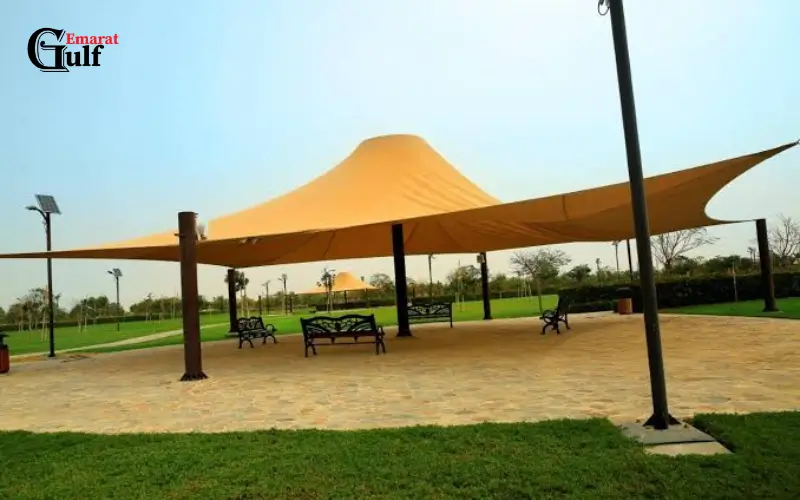
The park has a mix of learning opportunities and outdoor recreation. It is designed with planted spaces, shaded zones, paths for walking, informational kiosks, and children’s play spaces.
Wearing comfortable shoes is important for visitors as they have to walk from one feature to another on the ground. Take drinking water and factor in the weather and time to get between outdoor areas and paid attractions.
Families requiring step-free access, mobility support or stroller-friendly access should check current arrangements in place prior to visiting. Some areas and temporary operating conditions may require access to facilities.
Suggested Visit Plan
The total time spent is about two hours and three hours respectively for the main attractions without haste. The exact amount of time varies depending on how much time you spend looking at the displays and visiting the gardens.
| Visit stage | Suggested activity |
| First 20–30 minutes | Explore the entrance area and outdoor grounds |
| Next 30–40 minutes | Visit the Glass House |
| Next 30–40 minutes | Explore the Cave of Miracles |
| Next 30–45 minutes | Walk through the orchards and visit Moses Lake |
| Final 15–20 minutes | Explore remaining areas and take photographs |
This is not a set schedule, but a recommended route. The whole family with youngsters might require longer breaks; visitors primarily looking at the gardens can make a shorter walk.
Visitor Tips
- Always check out opening times and ticket costs before you go.
- Be sure to have comfortable shoes to walk around the grounds in.
- Visit in cooler hours, if possible.
- Supervise children around the lake and play areas.
- Allow separate time for the Glass House and Cave of Miracles.
- Obey signs and directions within the park.
- Ensure arrangements are made to ensure access, if there are specific mobility needs.
You can make some simple preparations to make visitors’ time as much as possible using, and not depending on, old information.
Why Visit Quranic Park?
The park is a blend of botany education, Islamic history, and outdoor recreation. Its centerpiece features explanations of selected Quranic references through the use of plants and landscaped areas and interactive displays, providing more than the typical experience of a garden.
It is especially suitable for families, students, and visitors who are interested in Islamic culture. The free outdoor grounds also make it possible to enjoy the park without purchasing tickets for the indoor exhibitions.
However, those seeking family-friendly activities and rides should consider another park. This is mostly about the chance to experience and learn about Quranic stories in a well-designed public area.
Conclusion
Quranic Park is an unusual and unique place in Dubai containing Islamic heritage, botanical education, and outdoor recreation. The park provides a platform for visitors to explore the Quranic references in an engaging way, from the Glass House and Cave of Miracles to the twelve orchards and Moses Lake. The outdoor grounds are also open to the public, making it a great option for families and visitors who are looking for a hands-on learning opportunity.
Visit during cooler times of the day, see the latest opening hours, and confirm ticket prices for indoor attractions before you travel. The park can be enjoyed by people of all ages, whether you’re interested in learning more about plants found in the Quran, bringing your children to a walkthrough of Islamic stories, or a quiet walk, there’s something for everyone.
Read Also: Creek Park Dubai: Complete Visitor Guide, Tickets, Timings, Attractions and Tips
Hamidiya Park: Location, Timings, Facilities & Things to Do
Mushrif Park Dubai: Timings, Tickets, Activities, Trails and Visitor Guide
Frequently Asked Questions
Is Quranic Park free to enter?
Yes. No entrance fee for the outdoor park. The Glass House and Cave of Miracles have separate entry charges.
Where is Quranic Park located?
It is located in Dubai, UAE, in Al Khawaneej.
What are the opening hours?
The standard published hours are daily from 9 AM to 9 PM. Please note that there are seasonal changes; please check before visiting.
How much are the tickets?
The two indoor attractions are pay-to-enter. Before buying, make sure you understand what the pricing and ticket system is.
What can visitors see in the Glass House?
Plants related to references in the Quran and Sunnah are displayed at the Glass House, accompanied by educational information.
What is the Cave of Miracles?
It is an interactive exhibition of some prophetic miracles described inthe Holy Quran.
How long does a visit take?
The main attractions and gardens can be explored in about two to three hours.
Is Quranic Park suitable for children?
Yes. Children can explore the gardens, learn about plants, and visit the interactive exhibits, with adult supervision.