





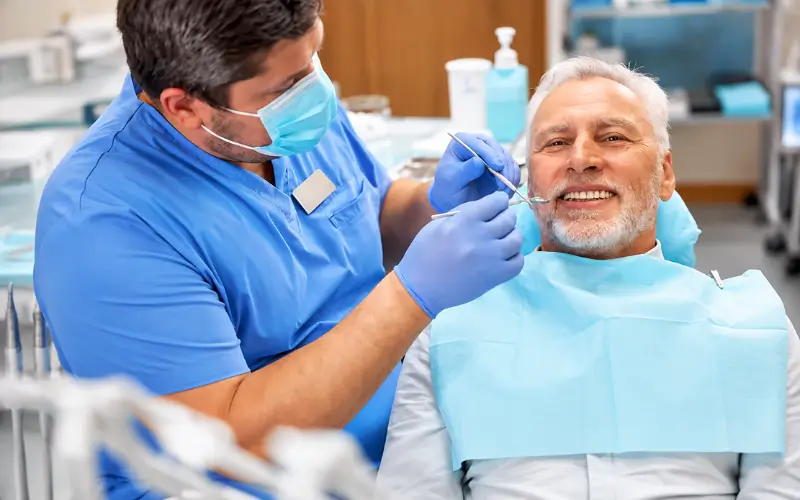
The typical person who enquires about same-day dental implants has a single image in mind; they think that when they go in, they will have a gap or a missing tooth and that by the end of the day they will have a tooth which looks completely normal. This image is mostly accurate, but it omits one point: the tooth you leave the clinic with is not the one that you keep.
The first tooth is only temporary and has a real role to play; if you understand what it is, how long it will remain and how to look after it, the following months will be much easier.
What the temporary tooth actually is
A temporary tooth is generally a lightweight crown or bridge made of acrylic or a similar tooth-coloured material and is fitted to the implant on the same day that the implant is placed; it is shaped so that it matches your adjacent teeth in size and colour and, from a normal speaking distance, most people cannot tell the difference.
The implant itself is situated below, in the form of a small titanium post which is inserted into the jawbone at the spot where the root of your tooth was. It takes the bone several months to grip the post securely, and during that time the temporary prosthesis holds the space so that you never have a noticeable gap.
Why the final tooth is not fitted on day one
After an implant has been put in, two things occur, and both of them take a length of time.
The bone gradually grows onto the surface of the implant and secures it in place. This process is known as osseointegration and usually takes a few months; the exact time depends on the condition of your bone and your general health. It would be inappropriate to fit a hard, fully functional ceramic tooth before this process is complete since the implant would then be subjected to chewing pressure while it is not yet ready to bear it.
The gum does alter in shape as it heals. For a few weeks following the surgery, it is a bit swollen and fits the tooth differently. A crown fabricated on day one would soon appear incorrect at the gum line as the swelling goes down.
Waiting is not a delay in your treatment; it is included as part of the treatment, and it is the fact that the time is temporary that enables you to wait comfortably.
How the temporary is made during your appointment
When same-day dental implants are being used, most of the planning is carried out before you even sit in the dentist’s chair. The dentist looks at a three-dimensional scan of your jaw, determines the precise position and angle for the implant, and draws up the design for the temporary in advance.
On the day of the procedure, the sequence is generally simple: the tooth that has to be removed is taken out, the implant is put into the site which has already been prepared, and the stability of the implant is then carefully checked. If it is firm enough, a small connector is fitted, and the temporary crown is then attached and adjusted so that it does not bear a heavy bite.
The importance of that final adjustment is greater than most people realise; your dentist will intentionally keep the temporary a little away from hard contact with the opposing teeth so that normal chewing won’t interfere with the healing implant.
How long the temporary stays in your mouth
For the majority of patients, the temporary lasts between three and six months; in some cases they are shorter and in others longer, and the straightforward answer is that it comes down to how your bone reacts.
The speed at which healing takes place depends on the density of the bone in that area of your jaw, whether or not a bone graft was carried out at the same time, whether or not you smoke, and how well disorders such as diabetes are managed; front teeth and back teeth recover at slightly different rates since the quality of the bone is not the same.
The dentist will check the implant at regular intervals and won’t proceed to the final tooth until the implant has been confirmed as stable. We don’t operate on a fixed timetable; instead, the mouth determines the pace.
What the temporary can and cannot do
A temporary tooth helps you look normal and enables you to speak confidently, with your ability to speak and feel confident usually coming back within a day or two. This is the main reason why people prefer immediate dental implants to having to wait for months with a gap.
There are limits worth knowing:
- It is not recommended to bite on hard foods with the temporary because the material is softer than that of a final crown and the implant underneath is still healing.
- Chewing things that are hard or sticky on that side can cause it to become loose or be damaged.
- It is normal for small chips to appear or for the surface to become slightly dull over time, and this is not an indication that there’s been a problem.
- Whitening will not change its colour, because the material does not respond the way natural enamel does
Imagine it as a pleasant substitute rather than something that is complete.
Caring for it day to day
When cleaning around a temporary, one must be gentle rather than avoid it. Plaque on healing gums is the most frequent cause of irritation during these first months.
After the day following surgery, gently clean the area unless your dentist gives you different instructions, and use any mouthwash that your clinic recommends. When the gums have settled, request to be shown how to clean under the temporary using an interdental brush or a floss threader.
Avoid using your tongue to check how firm it is, since dates, nuts and ice can be found anywhere at these gatherings, so stay away from the implant side for all three of them at present.
Moving on to your final tooth
Once the dentist has confirmed that the implant is ready, the temporary crown is removed, and impressions or a digital scan are made. Since the gum has already healed around the temporary crown and has therefore been formed into a natural collar, the final crown is designed to match that precise contour.
The last tooth is usually produced from zirconia or some other strong ceramic, and the colour is adjusted to match that of your adjacent teeth before the fit is checked and minor alterations are made to your bite. Most people immediately notice the difference in the way solid the tooth feels when chewing.
When to call your dentist
If the temporary crown feels loose or if it falls off altogether, or if it suddenly sits higher when you clench your teeth, or if the gum around it remains sore or swollen after the first week, you should get in touch with your clinic. None of these situations indicates that the implant has failed; they just mean that it should be examined sooner rather than at your next scheduled appointment.
If the piece comes off, then keep it and don’t glue it back yourself.
Conclusion
With same-day implants, you get a tooth on the same day as the surgery, and this tooth is a temporary one that carries out an important function while your jaw is healing. You should treat it gently, keep it clean, and remember that it will last for a few months, not a few weeks. By the time the final crown is placed, the delay will seem much more reasonable.
If you’re thinking about getting your teeth done in Dubai, ask your dentist to go over the temporary phase with you before you start. When you know what to expect, the entire process seems much more predictable.
Must Read: Al Karama Medical Fitness Express Services Center Timings, Fees, and Process