





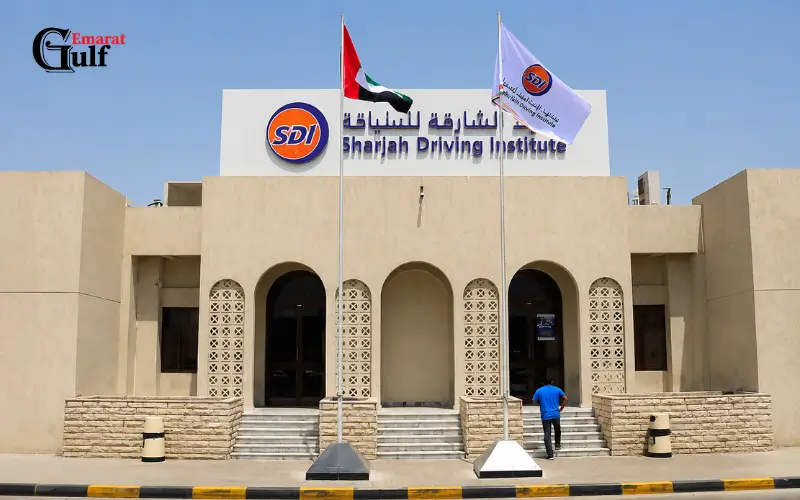
Sharjah Driving Institute is a very popular institute for students, workers, and new drivers to get professional driving training. The ability to drive a vehicle is now important to everyday life and work. Several students look for driving schools that offer practical driving lessons and have flexible hours. They also research inexpensive packages and coordinated training systems before enrollment. This guide covers fees and driving lessons, registration procedures, and preparation for a driving test in plain English. Individuals also look for Sharjah driving school fees, learner driving courses in Sharjah, and automatic driving lessons in Sharjah online. It helps students save time and money to understand the full process. Another benefit of having the right towing service is that they make beginning drivers more confident on the road.
Location: Sharjah Driving Institute
The institute is situated in Sheikh Khalid bin Khalid Al Qassimi Street, Al Ramtha, Sharjah, near Sharjah Central Jail, UAE. Its location is very convenient by major roads, public transport, and from different parts of the city. This branch is often the choice of learners as it offers training grounds, parking practice areas, and classroom facilities all in one place.
Why Driving Training Matters
Professional driving training enables the learner to understand aspects of road safety, traffic rules, parking techniques, and vehicle control. If you’re a beginner and you don’t have the right guidance, you may feel nervous when you’re given a driving test or when you’re in real traffic. Students learn to become more confident through proper lessons and to drive safely.
A solid training program will consist of theory lessons and on-road training. Students are introduced to traffic signs, lane position, parking skills, and safe drivers of the highway. Teachers also guide students to promptly correct errors, thereby enhancing test preparation and minimizing the risk of failure.
Eligibility Requirements
Learners should have the necessary requirements to be eligible to open a driving file. While criteria may differ slightly depending on the visa status and the type of license applied for, most applicants will require identification and medical verification documents to apply.
The table below summarizes some of the typical provisions for new applicants.
| Requirement | Details |
| Minimum Age | Depends on vehicle category |
| Emirates ID | Original and copy required |
| Passport Copy | Valid copy with visa page |
| Eye Test | Conducted through approved centers |
| Passport Photos | Usually required for registration |
| Training File | Opened after document approval |
Documentation requirements may change, so please check the current requirements before applying.
Registration Process
Most new learners have an easy registration process. Students will be required to bring necessary documents and take an eye exam prior to entering classes. Once approved, the driving file is opened.
Document Submission
Normally, the applicant will require an Emirates ID, a copy of the passport, a copy of the visa, and passport photos. All documents must be valid at the time of registration.
Eye Test
Eye assessment is necessary before driving classes. This process takes approved vision centers a short time.
Driving File Opening
Once the documents are approved, the learner’s file is generated. Students are then provided with class schedules and training information.
Class Timing Schedule
Driving schools usually offer flexible class timings for students and working professionals. Learners can choose morning, afternoon, evening, or weekend sessions based on their daily schedule.
| Training Session | Timing |
| Morning Classes | 8:00 AM – 12:00 PM |
| Afternoon Classes | 12:00 PM – 4:00 PM |
| Evening Classes | 4:00 PM – 9:00 PM |
| Weekend Classes | Friday & Saturday |
| Theory Classes | Flexible Timings |
| Practical Lessons | Based on the Student Schedule |
Course Types and Training Options
Learners have a variety of motivational aims for learning to drive. A few students are interested in learning about Manual Transmission, while others choose automatic driving lessons in Sharjah due to the easy handling of automatic cars.
Typically, driving schools offer a variety of driving course sets for novice drivers, professional drivers, and foreign drivers with different licenses. Typically, the time and number of practical lessons are dependent on the learner’s driving experience.
Manual vs Automatic Lessons
The manual training focuses on gear shifting, clutch control, and advanced vehicle coordination. Automatic lessons place more emphasis on road positioning, awareness, and safe driving with the automatic transmission.
For this reason, many modern learners are now opting for automatic training, as it makes driving in heavy traffic a lot easier. But a few pupils still want to learn driving by hand to give them more flexibility.
Manual vs automatic can be a matter of confidence, future driving requirements, and personal preference.
Theory Classes
Theory instruction is a crucial component of driving instruction. Learners learn about traffic signs, road markings, safe following distance, emergency procedures, hazard awareness, and legal responsibilities.
Theory learning may take place in a classroom or via digital learning systems, depending on the package chosen. Typically, students will have to finish the theory lessons before they can move on to the practical tests.
In general, theory training will focus on the following topics:
- The laws and signs governing traffic.Road traffic laws and traffic signs.
- Safe lane changing techniques.
- Speed management
- Emergency braking awareness
- Pedestrian safety
- Night driving precautions
- Highway merging rules
- Defensive driving methods
Good theory knowledge may have a positive impact on road performance, as students will have an understanding of what action to take in actual traffic.
Practical Driving Lessons

Practical lessons are built in a gradual sense to build up confidence. The instruction process starts with the simple steering and control of the movement of the learner, then expands to more complex traffic situations.
Typical training sequences involve going through areas of low traffic, intersections, parking lots, roundabouts, freeways, and city driving.
Instructors check on:
- Steering control
- Mirror usage
- Signal timing
- Parking accuracy
- Lane discipline
- Braking smoothness
- Speed control
- Observation skills
Practicing regularly between sessions tends to accelerate improvement and performance in assessments.
Sharjah Driving Institute Fee 2026
In most instances, the fees associated with a driving course will be determined by the category of the course, the type of vehicle, and the number of lessons that will be taken. People who are starting will generally be charged more, as they will need extra practical training and tests. Sources for the Sharjah driving course updated that the total amount of the beginner packages might vary from AED 3,000 to AED 6,000 depending on the chosen plan.
| Training Service | Estimated 2026 Price |
| Eye Test | AED 100 |
| Traffic File Opening | AED 200 – 245 |
| Theory Classes | AED 650 – 882 |
| Manual Driving Course | AED 3,000 – 5,800 |
| Automatic Driving Course | AED 3,500 – 5,965 |
| Parking Training & Test | AED 350 – 400 |
| Final Road Test | AED 300 – 350 |
| License Issuance | AED 300 |
| Retest Charges | AED 200 – 500 |
The prices are subject to change based on the type of course, supplemental classes, and retesting needs.
Factors Affecting Total Cost
There are a few things that factor into what learners end up paying during the licensing process. A big consideration is experience in driving. New drivers typically need more hands-on driving experience than experienced drivers. Another factor is test performance. Frequent failures can lead to higher costs due to additional lessons and rebooking tests.
The cost may also vary depending on training schedules. Premium timing or weekend classes might be more expensive compared to regular classes during the week. Another factor to take into account is vehicle type. There may be a variation in packages depending on the availability of teachers and the demand for lessons.
Flexible Lesson Scheduling
Students nowadays are likely to combine driving lessons with other activities such as a job, studies, or family duties. Flexible scheduling is therefore of great importance to many training centers.
Generally, there are morning, afternoon, evening, and weekend services. Some students like to take courses that are very short; others like to take courses at a slower pace.
Being able to have flexible scheduling can be helpful for the students to maintain consistency, which is essential for skill development.
Parking Training and Assessments

For beginners, parking can be difficult due to the need for accuracy and control of the vehicle. Many training programs have specific parking sessions.
Learners usually practice:
- Parallel parking
- Angle parking
- Garage parking
- Emergency parking
- Reverse parking
Mirror observation, steering timing, wheel alignment, and speed control are taught during these exercises.
Coping with the stress of parking evaluations can have a significant impact on test scores.
Internal Assessments
Most students undertake internal assessments before the final road assessment. The tests assist teachers in deciding on the readiness of students for official examination phases.
Internal tests could consist of:
- Parking tests
- Basic road handling
- Traffic response checks
- Lane discipline evaluation
- Roundabout navigation
- Highway driving observation
When a student fails an internal test, he/she typically get more practice before re-taking the test.
Final Road Examination
The final driving test is one of the most pivotal phases in the licensing process. Examiners assess the performance of learners in actual traffic situations and their compliance with safety practices.
All students are judged on the following during the examination:
- Vehicle control
- Traffic awareness
- Observation habits
- Proper signaling
- Smooth braking
- Correct lane changes
- Parking ability
- When decision-making becomes rushed. Decision-making becomes rushed.
Learners look for Sharjah road test booking and RTA driving test Sharjah online to gain a better understanding of the process of the evaluation before going for the test.
It is very critical to prepare before the final assessment. If students remain relaxed and do what is asked, they tend to do their work with greater confidence.
Common Reasons for Test Failure
Commonly, students fail because they do not know what to avoid doing, so it is important to help them know. There is a problem of a lack of observation. Students sometimes neglect to look in the mirror when changing lanes and turning.
Others have difficulty getting into the parking lot or become anxious when there is heavy traffic. Another common problem is speed control. Both exceeding the speed limit and driving too slowly while evaluating may result in safety issues.
Tips for Passing the Test
The following tips are designed to help you pass the test:
Regular preparation can help make it easier to pass the final assessment.
- Important strategies include:
- Regularly do mirror checks.
- Keep a proper following distance.
- Be calm under traffic pressure.
- Stick to the lanes and be careful of lane discipline.
- Avoid sudden braking
- Be able to read road signs correctly.
- Follow all Examiner directions carefully.
- Please come in early for test appointments.
The examination is often a game of confidence, patience, and practice.
Importance of Instructor Quality
Successful teachers are a key contributor to the success of students. Good trainers explain, give constructive feedback, and offer practical tips for coping with challenging traffic situations.
Many students like teachers who are patient and understanding when teaching, because when a student is afraid, he or she will need encouragement to gain confidence.
Communication is important too. Learning is more effective when the instructions are simple, practical, and easy to understand.
Technology and Modern Learning
Over recent years, there has been a significant change in driving education. Online lesson booking, theory learning modules, progress monitoring, and simulation-based practice are all supported by digital systems.
Technology enables students to practice traffic signs, hazard situations, and driving techniques before class.
Some training centers may also include a mobile application for scheduling, tracking payments, and reminders of lessons. These systems enhance the convenience and help students keep organized.
Learning Environment
A positive learning environment can relieve stress and enhance performance. Beginners can get a better experience from comfortable training vehicles, organized lesson structures, and supportive instructors.
Students tend to learn more quickly when they are relaxed while learning. Worry and anxiety may adversely impact the steering abilities, observation routines, and reaction time.
Students learn to drive in an environment that promotes safe driving behaviors that will be beneficial beyond their driver’s license.
Choosing the Right Package
The choice of package is dependent on individual requirements, confidence level, budget, and time flexibility.
Different types of learners care about different things, such as a price tag for the course and speedy completion programs. For students who need additional confidence-building lessons, consider extended lesson packages.
Training structures are the most popular choice before enrolling in Sharjah Driving Institute as they are expecting to receive professional guidance, receive structured courses, and be prepared for a road examination.
When you take time to compare package specifics, you can avoid any shock when you pay the bill.
Estimated Timeline for Completion
The overall duration is dependent on the number of lessons, the performance of the assessments, and the availability of classes.
Students who come to lessons regularly tend to finish the process quicker than those who sit for longer between lessons. If learners do not pass internal assessments or final exams, then this can cause a delay.
With regular practice, motivated students can complete training within a reasonable period of time, in general.
Challenges New Drivers Face
It is normal for new learners to be nervous in the early lessons. It may seem like a daunting task at first to coordinate steering, observe traffic, and control speed all at once.
Many people often have trouble with parking, too. When performing reverse movement and mirror coordination, repetition often leads to improvement.
Novice drivers who lack the training to handle heavy traffic can also get stressed out when facing congestion. But it takes time to build up confidence on the road.
Benefits of Professional Training
Going to school for professional instruction is not only beneficial to pass the road test, but it is also beneficial in the long-term. Professional drivers typically exhibit increased road awareness, safer driving practices, smoother driving, and better defensive driving skills.
These abilities help to decrease the chance of accidents and boost overall driving confidence. Structured education also focuses on the legal responsibilities and safe driving ethics of students.
What to Expect on Test Day
Test day preparations start before riding into the vehicle. Students should get a good night’s sleep before class, come prepared with the necessary documents on time, and be mentally prepared for class. Examiners typically check seat belts, seat adjustments, and vehicle preparedness before moving.
Learners don’t want to make mistakes because they get panicky about breathing. Pupils should pay attention to road safety and not try to impress the examiner by driving too fast or too aggressively.
Final Thoughts
The selection of an appropriate driving school can markedly impact a learner’s self-assurance, skill development, and general experience of getting a license. Pupils who grasp the registration procedure, the fee system, the teaching system of lessons, and the test phases are normally more confident during the training.
In conclusion, Sharjah Driving Institute continues to be a preferred choice for driving schools in Sharjah, UAE, offering a well-structured curriculum, hands-on experience, and expert guidance to aspiring drivers. Practice, patience, and preparation continue to be the key ingredients to success.
Must Read: Get Your UAE Driving License Faster — Enroll at Belhasa Driving School
Complete Guide to Driving and Toll System in Abu Dhabi
FAQs
What documents are needed for driving registration?
Typically, students will be required to bring with them their Emirates ID, passport, visa, passport photos, and eye test certificate.
How much does a driving course cost in 2026?
The cost of the driving courses varies from AED 3,000 to 6,000 per training package, depending on the type of training.
Are automatic driving classes available?
Yes, there are times when the driving lessons are automatic, so that they are easier for beginners.
How long does the driving process take?
This schedule is subject to the availability of classes, frequency of classes, and test performance.
What happens if a student fails the road test?
Pupils typically require additional sessions before taking another driving test.
Can students select flexible class timings?
Most driving schools have driving classes available in the morning, evening, and on weekends.
Why is professional driving training important?
Professional training enhances road safety knowledge, driving confidence, and driving skills.