


The one thing that is never on a Dubai floor plan and is the most expensive is a sea view. The difference between the prices of two different flats in the same tower on the same floor with identical layouts and finishes can be anything from hundreds of thousands of dirhams, depending on the apartment’s orientation – water-facing or road-facing. It is the budget discussion that can begin after buyers shortlist a building and find this property.
The premium is real, measurable, and it has real life costs that many first-time buyers don’t consider. This guide aims to explain what the sea view contributes to the purchase price, what it contributes to running costs per annum, and if it is worth it over the term of ownership.
How Much More Does a Sea View Cost in Dubai?
A sea view apartment can often be quite expensive, ranging from 30 to 50 percent more than an apartment with a very similar interior layout that does not have a view of the sea. The premium is not a new concept of the developer. It continues to be resold at a price, that is the most obvious sign that people are still willing to pay for it.
The scale is not dependent on the quality of view, but on the building:
- Full, unobstructed sea view: roughly 30 to 50 percent over an inland-facing unit in the same tower.
- High-floor sea-facing units in JBR: 40 to 50 percent over an identical low-floor apartment facing the community.
- Full marina view in Dubai Marina: 25 to 35 percent over a partial view or a Sheikh Zayed Road aspect.
- Partial sea or lake views: around 15 to 25 percent.
- Beachfront frond villas on Palm Jumeirah: frequently more than 100 percent over a comparable inland villa.
The pattern is regular. Certainty of view, not proximity to water is what buyers are paying for. The market prices the risk of building in the neighbouring plot into an apartment that is close to the sea and the plot itself not built on.
What Separates Two Identical Apartments in Price?
The main factors influencing the price differential between units of similar size and in similar buildings include: height, orientation, and permanence of outlook. The view is clear of other buildings depending on the height. The direction of the apartment is important for determining how comfortable it will be and how much it will cost to cool. The permanence of the view is what will determine whether it will be passed down to the next construction cycle, and what buyers pay the least attention to. A comparison of luxury waterfront apartments in Dubai will require the master plan of all neighbouring plots before a commitment is made since an approved tower adjacent to the plot can take away a premium which can take years to build up.
Most people do not consider balcony depth when buying a property. The value of a view, which can only be seen through glass, is different than a view with usable space in front, and it is reflected in resale listings. The buildings with floor-to-ceiling glazing and without terrace appear to look good and are reasonably priced in pictures.
What Are the One-Off Costs of Buying in Dubai?
Transaction costs in Dubai are typically 6 – 9% of the sales price on top of the secondary market price for buying off plan, and can be as high as 4% in an off plan sale off the developer. These are paid for on the spot and are not usually financeable.
- DLD transfer fee: 4 percent of the purchase price or the DLD valuation, whichever is higher.
- Oqood registration for off-plan: 4 percent, charged at booking and not repeated at handover.
- Trustee office fee: approximately AED 4,000 to AED 5,250, with title deed issuance of AED 250 to AED 580.
- Agency commission: 2 percent of the price plus 5 percent VAT on that commission, usually waived on developer-direct off-plan sales.
- Developer NOC for resale: AED 500 to AED 5,000 depending on the developer.
- Mortgage costs, where applicable: 0.25 percent of the loan to the DLD, a bank arrangement fee of about 1 percent with a minimum near AED 10,000, and a valuation fee of AED 2,500 to AED 3,500.
One-off costs are around 7.7 per cent for a buyer on a 75 per cent loan to value (LTV) on a second purchase. 8 percent budgeting provides an easier arithmetic in the trustee’s office!
How Much Are Service Charges on a Waterfront Apartment?
The rates for service charges for premium waterfront towers in Dubai are generally between AED 20 and AED 30 per square foot per year, while the same charge on equivalent waterfront towers located inland is approximately AED 14 to AED 18 per square foot per year. That can amount to a little over AED 18,000 per year over a 1,500 square foot 2 bedroom.
The gap indicates real costs. Buildings on the waterfront have increased facade maintenance due to salty exposure, increased common amenity spaces, marina or beach access equipment, and increased landscaping. Charges are also used to pay for a sinking fund to cover major works like chiller replacement, lift renewal, and cladding repair – so a building that ‘has a low service charge’ is often not a deal, but a warning.
The impact on returns is straight-forward. Based on the above, a net yield of AED 4 percent is arrived at, after all other costs, on a gross yield of AED 200,000, which is 5 percent before other costs, on an apartment purchased at AED 4 million with annual service charges at AED 37,500 (AED 25 per sq ft). When evaluating an investment’s rental income, it’s important to make realistic assumptions about the net income, not the gross yields that are advertised.
Does a Sea View Pay for Itself?
However, over its long holding period, waterfront apartments in Dubai have generally proven to be better value in terms of better rental yields, lower vacancy, and increased liquidity for resale. Sea view tenants will pay more for a sea view and the likelihood of turnover is greater, meaning more void periods and re-letting expenses that are also going to eat away at the return of inland stock.
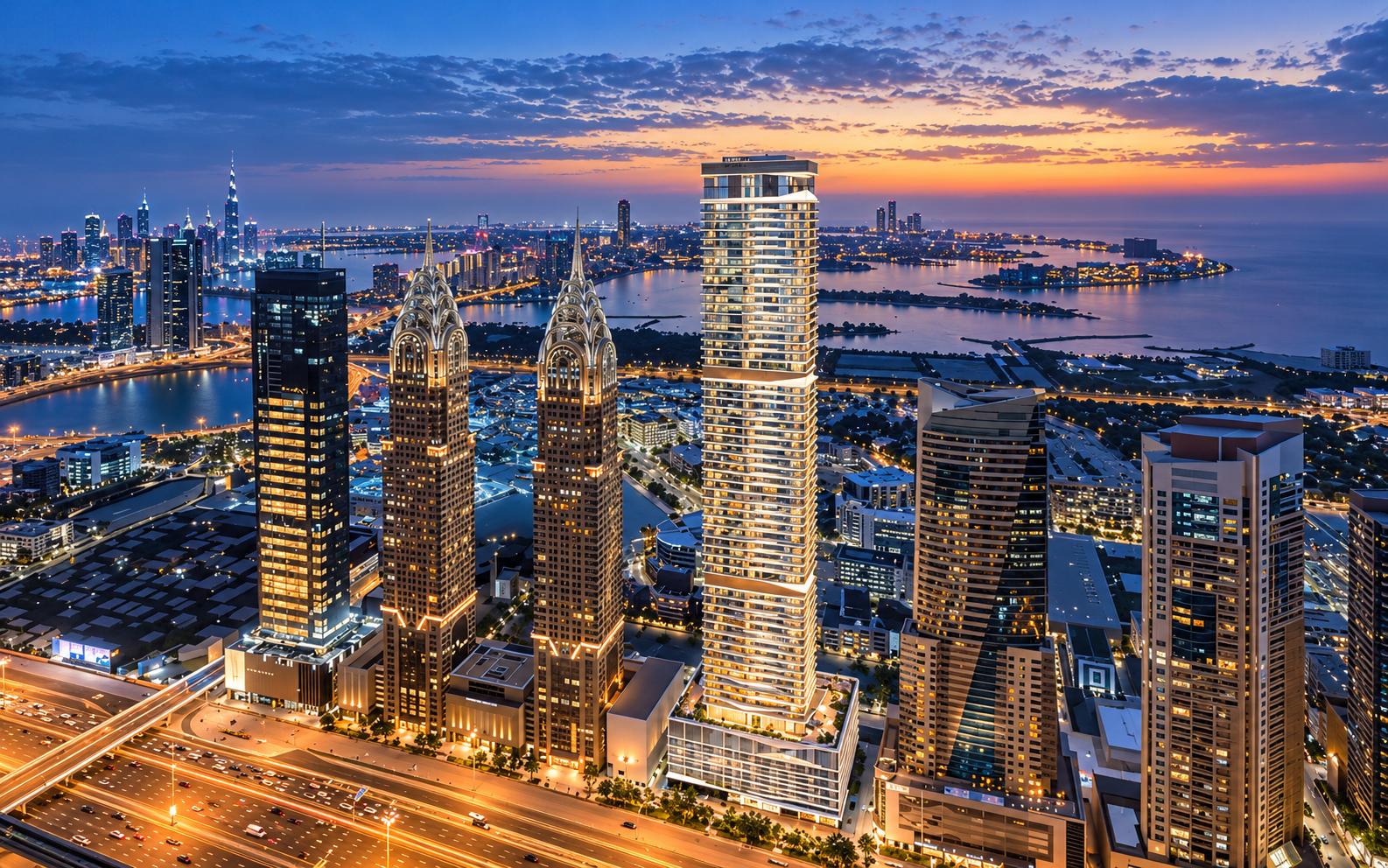
The building itself is as much a product of the design and delivery of the building shapes as it is a product of the view. Their outlook, orientation, glazing and amenity placement is more reliably retained in towers built to accommodate their outlook to the water, not accommodate the water to the towers. The main amenity decks in the 66-storey tower designed by Pininfarina, whose handover is set for the end of 2027, at Dubai Internet City are located on the 39th and 40th floors, which is where they’re meant to be so as to avoid being exclusive to the top apartments of the building. The kind of planning decision is where you can make a difference between a lasting premium and a short-term one.
The exception is a piece of land purchased for its view that doesn’t fall under protection. If the premium is based on a view that the neighbouring development is approved but could block the view, the premium may not be realised on resale. It’s the view that’s being sold; its endurance that’s the asset.
What the Numbers Mean for a Buyer Deciding Today
A sea view in Dubai does not come at a little extra cost. It’s a 30-50 per cent premium on acquisition, an extra AED 6 to AED 12 in running costs per square foot, and a decision that will impact both the rentability of the property and future demand for its resale for the life of the asset. As a non-medicinal treatment, it is a costly cosmetic. If measured correctly, it is the most valuable component of the buying price.
Buyers evaluating luxury waterfront apartments in Dubai should therefore spend their diligence where it matters: confirming what can be built on neighbouring plots, reading the service charge history rather than the first-year estimate, and modelling returns on net rather than gross. Those three checks cost nothing and determine whether the premium paid today still exists in ten years.
Read Also: Al Shaiba Tower Dubai