





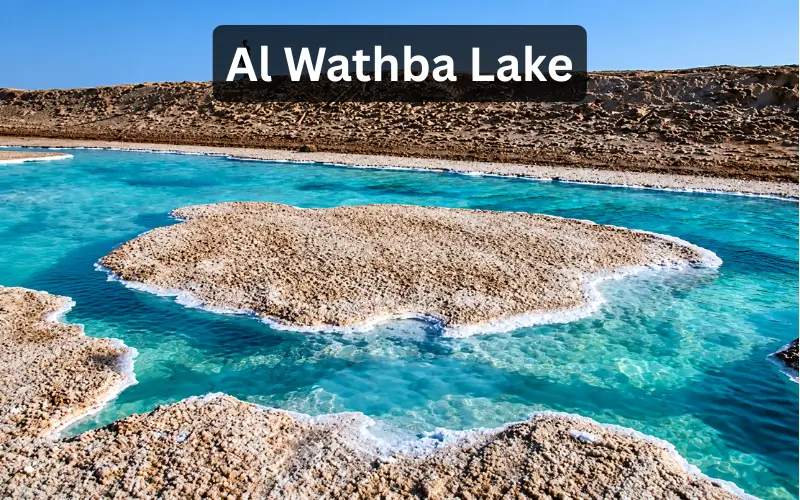
Al Wathba Lake is a one-of-a-kind natural phenomenon that features turquoise green water, white salt deposits, and tranquil desert views. It’s an opportunity to see nature, take stunning photos, and discover a different Abu Dhabi away from the hustle and bustle of the city. It is distinctive for its colors and salty surfaces, and is a wonderful spot for naturalists and photographers.
The unique thing about this salt lake is the stark contrast between the colourful water and the desert surrounding the lake. There are opportunities to appreciate the beauty, take great photos, and enjoy a peaceful outdoor experience. It is a unique sight and a natural beauty that whets the curiosity of visitors to the UAE.
Quick Facts About Al Wathba Lake
| Detail | Information |
| Location | Al Wathba area, Abu Dhabi, United Arab Emirates |
| Attraction type | Desert salt lake and outdoor landscape |
| Known for | Turquoise-green water, white salt formations, and desert scenery |
| Main activities | Photography, sightseeing, and enjoying the landscape |
| General access | Road travel followed by an unpaved approach reported by visitors |
| Entry fee | No verified official fee schedule found for the salt lake |
| Public facilities | Do not assume toilets, cafés, or visitor services are available |
| Best general season | The cooler months, subject to weather and site access |
| Nearby natural attraction | Al Wathba Fossil Dunes |
| Important distinction | The salt lake is not the same as Al Wathba Wetland Reserve |
Access, facilities, and fees for visitors are subject to change. The details of the protected wetland reserve should not be extrapolated to the individual salt lake.
Where Is Al Wathba Lake Located?
Al Wathba Lake is located in the Al Wathba region of Abu Dhabi, United Arab Emirates (UAE). It is located in a desert area, beyond the hustle and bustle of the city, with a view of turquoise-green water, white salt formations, and open, sandy spaces.
The lake can be reached by road from Abu Dhabi, but the last stretch may be on dirt roads. People should always double-check their travel plans and conditions when using the roads before they depart. Note also that the salt lake is not to be confused with Al Wathba Wetland Reserve, another attraction with its bird population and flamingos.
How to Reach Salt Lake
The most convenient access to the salt lake is by car from Abu Dhabi. Use the plus code 5G52+HX, Abu Dhabi, to locate the desired destination or search Al Wathba Long Salt Lake on Google Maps. It takes about an hour to drive from central Abu Dhabi. The end of the trail is on an unpaved road; please check road conditions.
By Car
Head towards Al Bihouth, close to Al Wathba South, following the directions of your navigation system. The road used is mostly good roads with some sand or uneven ground at the end. If the track is rough, you may find an SUV or an appropriate four-wheel-drive vehicle useful, but never proceed without checking the track first.
By Taxi
A taxi or private driver may be able to take you to the side of the lake, but check with the driver if they are able to get to the end of the access. The attraction is located in a remote location, so plan your return route before you head out of Abu Dhabi, and don’t wait for a ride to come by.
What Makes Salt Lake Different?
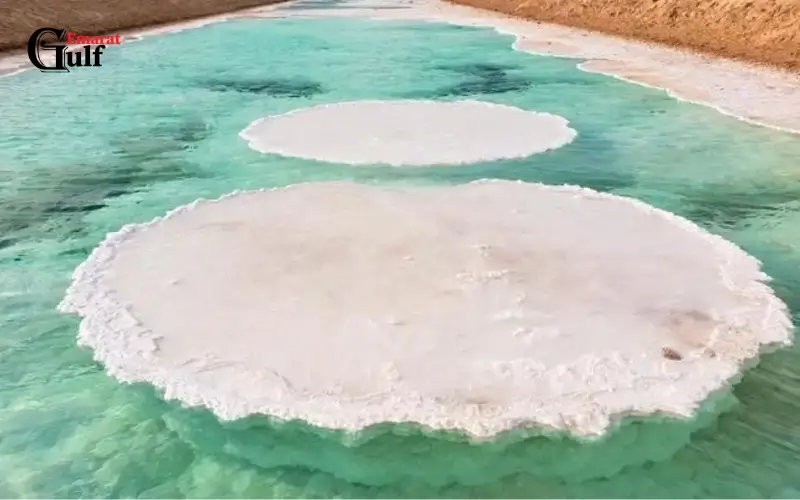
Coloured water, light mineral deposits, and the desert setting surrounding it are the main attraction. The water can be greenish or turquoise, and white salt formations can be seen depending on the water level, light, and surface conditions, resembling irregular islands or stepping stones.
These features result in a landscape that is unlike the traditional desert image of the Arabian desert. The lake does not have a continuous stretch of sand, but rather exposed mineral surfaces, shallow water, and open ground.
How the salt formations develop
The process by which water evaporates and leaves behind minerals may result in the formation of salt deposits. With repeated drying and wetting, crusting and irregular patterns may be seen on exposed surfaces.
But the exact geologic and hydrologic explanation for all the formations at this individual site is not substantiated on the official site visitor information retrieved for this article. Thus, it is not correct to state that all white formations are naturally occurring structures, or that the lake is entirely natural.
The topography can be a feature formed by both the flow and evaporation of water. This distinction is important for visitors to understand and appreciate the landscape without making exaggerated claims about its origins.
Why the water appears green or turquoise
The colour of water changes under different lighting conditions, depth, suspended matter, dissolved substances, and colour of the surface. Shallow water may appear different than deeper water, and reflections in a clear sky can alter the appearance of the water during the day.
Do not use the colour of the lake as an indicator of water quality, or the fact that it is drinkable or safe for swimming. No water-quality assessment was found that would support those conclusions at this site.
The best alternative is to experience the difference between the land and the sea while keeping a distance from the salt crust and water.
Best Time to Visit
Most of the time, it’s easier to enjoy the outdoors in Abu Dhabi during the cooler seasons. The temperature during the day is generally more pleasant for walking and taking photographs (from November to March) than in the hottest months. Conditions may change; please consult the weather forecast before going out.
Winter visits
For visitors looking to spend more time outdoors, but not in the heat of summer, winter is an obvious option. The fall temperatures can also help make the ride and nearby strolls around the property easier.
It can be a powerful direct sun in winter. Use water, wear appropriate footwear, and don’t walk long distances on unfamiliar terrain.
Early morning and late afternoon
The mornings and the late afternoon are good times for taking pictures. Sunlight is angled at low levels and shows off texture in the salt deposits as well as sharper shadows on the adjacent landscape.
Photographs may also have warmer hues in the late afternoon. But sunset doesn’t have to be the only consideration when planning a return. Allow sufficient daylight on the track to ensure safe navigation, especially if unfamiliar with the area.
Summer visits
During the summer, there is a need for extra care as there are areas of desert terrain that can get very hot. Warm conditions and dry weather can make the outside an uncomfortable place to be, even for short periods of time, and hot vehicles can become oppressive and uncomfortable even for a brief outdoor wait.
If you choose to travel in the warmer months of the year, take the weather forecast, plan for less time in the sun than usual, and always bring more water than is necessary. Do not travel if the weather or access conditions are unsafe.
After rain
Shallow water and the ground around it can also change color in the presence of rain, and pieces of dirt can become slippery or hard to cross. An attractive landscape after it rains does not mean that it is easier or safer to negotiate.
Avoid assuming that access will be better if it has recently rained. Check local conditions and DO NOT drive across areas where there is soft ground or standing water with unknown depth and stability.
Things to Do at the Salt Lake
It is most suited for simple outdoor activities and not an organised day of entertainment. The visitor is expected to plan according to the landscape and be equipped to take care of their own refreshments and comfort.
Photography and landscape viewing
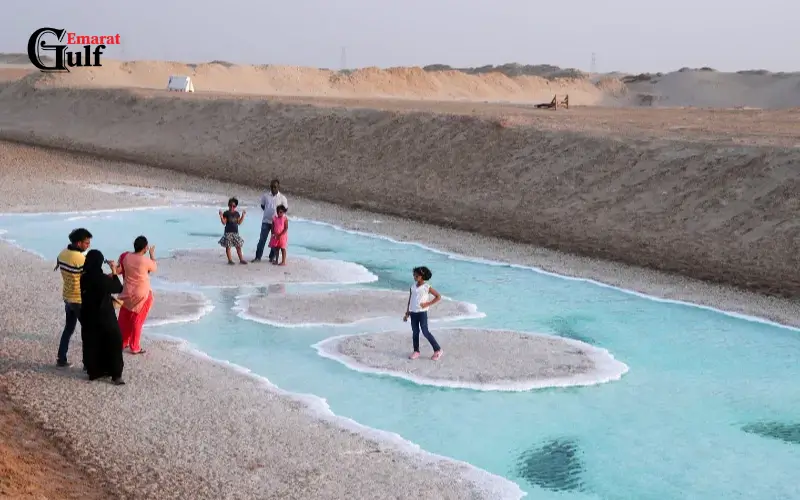
One of the primary motivators for visitors to come to the site is photography. A mix of pale salt deposits, coloured water, and open desert offers opportunities to capture broad landscape images and close-up images of surface patterns.
Consider varying the composition for better effect, rather than just taking shots of the water. Adding the horizon, surrounding landscape, or the difference between the salt and sand can convey the dimensions and feel of the location.
Take advantage of natural light to discover textures; do not stand on brittle crusts to get a closer look. A zoom lens may be useful to zoom in on close-ups without having to be at the water’s edge.
A quiet outdoor break
Visitors who like to spend a more laid-back time without the hustle and bustle of the urban attractions might prefer the remote setting. These can be enjoyed, with time spent observing the changing colours and taking photographs, whilst enjoying the open landscape.
This is not a mature park for recreation; however, it has a predictable program of events. There is no basis for guaranteeing any organised tours, food outlets, permanent picnic facilities or visitor services to the salt lake.
Take all your equipment with you to your planned stop and take any rubbish with you when you are leaving.
Exploring the surrounding desert landscape
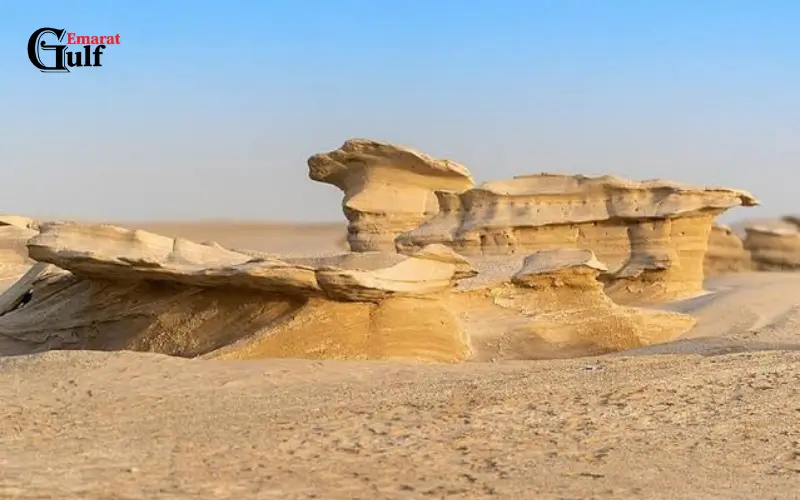
Other geological and ecological resources exist in the wider Al Wathba area, such as the Al Wathba Fossil Dunes and the separately managed wetland reserve. These are different attractions and should be booked individually.
The fossil dunes have been recognized for having unusual mineral-cemented formations. There is a link between the wetland reserve and bird watching and conservation. They should not be used as substitutes for the salt lake, and their entry requirements could vary.
Always check if each attraction is open and whether there’s an accessible path to the site for your vehicle and schedule before booking them together.
Facilities, Parking and Entry Fees
The first thing to know before arriving at the salt lake is that it doesn’t look like a fully-fledged tourist site. Visitor accounts published include a very remote location with little or no public facilities, with no confirmed café or toilet facilities at the lake itself. These reports are intended to be used as a guide only, as conditions may change.
| Facility | What to expect |
| Toilets | Availability at the salt lake is not confirmed |
| Cafés and restaurants | Do not rely on nearby food outlets |
| Drinking water | Bring your own supply |
| Shade | Natural shade may be limited |
| Visitor centre | Not confirmed at the salt lake |
| Parking | Check the condition and legality of the available stopping area |
| Entry fee | No verified official fee schedule found |
| Accessibility | Uneven ground may limit access for people with mobility difficulties. |
Do not assume that the information published for free entry in Al Wathba Wetland Reserve applies to all nearby attractions. The Environment Agency – Abu Dhabi says that there is no entry charge for the reserve while at the same time stating that the reserve is currently closed for development, “temporarily”, until further notice.
Parking considerations
Visitors will park only in areas where parking is safe and allowed. Never obstruct access tracks, park a vehicle on unsafe terrain or overhangs, or park near salt structures.
Before leaving the main road, decide on a meeting point if travelling in more than one vehicle. It can be difficult to reverse or turn around in narrow areas, and reversing or turning around may be indistinguishable on remote tracks.
What to Bring Before Leaving
The preparation is especially crucial due to the remote location of the site and the absence of confirmed facilities.
- Drinking water: Bring sufficient water for your group and plan for some extra in case the trip is longer than anticipated.
- Sun protection: Bring sunscreen, sunglasses, and a hat, even during the cooler months.
- Appropriate footwear: Appropriate shoes should be able to protect against sand and rough terrain and may have to withstand sharp and crusted surfaces.
- Charged phone: Plan or preview your routes before going to areas with poor cell coverage.
- Vehicle essentials: Ensure fuel, tyres and spare tyre are all in good condition prior to use on an unsealed road.
- Waste bags: Take away waste with you; don’t leave it at the site.
- Lighting: Take a torch, although it’s unlikely you will need it if you return during the night towards dusk, so ensure that you complete your return in good light.
These preparations are better than making assumptions about the nearby stores, public toilets, or roadside assistance.
Safety and Environmental Responsibility
The weird shape of the salt lake can lure tourists to walk near or step onto the light formations. These can have irregular surfaces, may be brittle or unstable, and surface appearance is not a good indicator of load-bearing capacity.
Do not venture onto unsafe ground. Avoid climbing on unstable structures, driving on the salt crust, or going into the water. The color of the water does not indicate the chemical content or contactability of water.
The remote setting also implies that a minor problem may escalate into a bigger problem due to a lack of water, fuel, or communication. Don’t drive alone if you are not used to driving in the desert, and don’t drive when a vehicle is over its limits.
Environmental care is also important. Carry out all trash; do not harm or upset the land or wildlife. Do not trespass on or look for alternate access to a restricted area that has been fenced off.
Al Wathba Salt Lake vs Al Wathba Wetland Reserve
The salt lake is mistaken for the wetland reserve due to the similarity of their names and their connection with water and natural landscapes. They are separate spaces and separate functions.
| Feature | Salt lake | Wetland reserve |
| Main appeal | Coloured water, salt deposits and desert scenery | Flamingos, birdwatching and wetland ecology |
| Setting | Remote desert landscape | Protected ecological reserve |
| Main activities | Sightseeing and photography | Nature trails and wildlife observation when open |
| Management information | No verified official visitor schedule identified | Managed by the Environment Agency – Abu Dhabi |
| Current access status | Check local access and track conditions | Official website currently lists a temporary closure |
| Entry information | No verified official fee schedule found | Official information lists free entry |
In 2013, Al Wathba Wetland Reserve was declared a Ramsar site and is recognized for its enhanced flamingos, over 250 bird species, and 37 plant species. There are walking trails and a birdwatching hide in the reserve, which are outside of the salt lake. Please consult the Environment Agency – Abu Dhabi website for the most up-to-date access information before visiting.
Conclusion
Al Wathba Lake is a unique natural wonder, whose waters are a beautiful turquoise-green and which creates white salt formations, while the area is a tranquil desert landscape. It provides a chance to see the landscape, capture photos, and see another side of Abu Dhabi away from the hustle and bustle of city life.
Please ensure you are aware of the current access and conditions before travelling, are aware of the desert environment, and have sufficient water and other essentials with you before you start your journey. Treat the natural landscape with respect, don’t disturb any fragile salt formations, and leave the area tidy for future visitors to experience the unique scenery.
Read Also: Creek Park Dubai: Complete Visitor Guide, Tickets, Timings, Attractions and Tips
Hamidiya Park: Location, Timings, Facilities & Things to Do
Mushrif Park Dubai: Timings, Tickets, Activities, Trails and Visitor Guide
Frequently Asked Questions
Where is Al Wathba Lake located?
It’s located in Al Wathba, part of Abu Dhabi, UAE, and is famous for its peculiar salt formations and colored water.
What makes the lake special?
The lake’s distinctive appearance is due to the contrast between the turquoise-green water, white salt crusts, and desert around the lake.
Is the lake open to visitors?
The current situation with regard to access is not officially confirmed. Please keep up to date with local changes before traveling.
Is there an entry fee?
There is no official entry fee for the salt lake, though there is a possibility of unofficial fees. Find out in advance if there are access limitations.
When is the best time to visit?
In the cooler months (November through March), it is more comfortable to be outdoors and photograph.
Can visitors swim in the lake?
A safe swim is not advised without proper water safety information. Do not walk on and enter the water on fragile salt formations.
Is a 4×4 vehicle necessary?
If the final access track is sandy or rough, a 4×4 might be a good option. Determine road conditions before selecting your ride.
Are restaurants or toilets available nearby?
There is no confirmation of public facilities at the lake. Pack drinking water, food, and other necessities before leaving Abu Dhabi.
Is the lake suitable for families?
The scenic views are great, but it is a remote area and requires preparation. Ensure children stay away from the water’s edge and from surfaces that are not stable.
Can visitors take photographs?
When access is allowed, yes, there is a lot of photography. The white salt formations and coloured water result in unique landscape shots.