




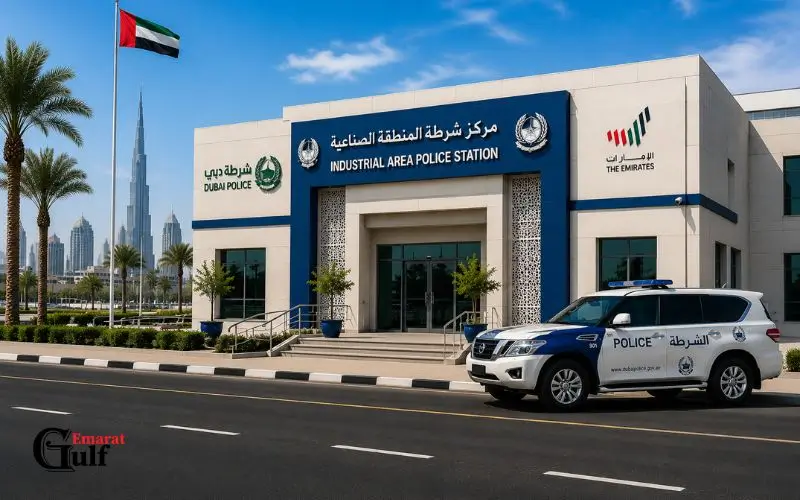
Industrial areas are the key to economic growth; they contain factories, warehouses, logistics centres, workshops, and commercial facilities. These areas are open 24 hours a day and employ thousands of workers, contractors, transport operators, and business owners. Due to the active nature of the area, it is necessary to maintain good law and order. This is where the industrial area police station is important. A special policing team in a commercially active area can help to deter crime, respond in emergencies, resolve conflicts, and contribute to public safety programs. Furthermore, in fast-growing areas such as the UAE, industrial policing has become increasingly crucial with the increase in business activities, workforce diversity, and scale of infrastructure growth.
Understanding Industrial Zone Policing
Security needs in industrial districts are very distinct from those in a residential or commercial district. These areas may include manufacturing valuable equipment, raw materials, vehicles,s and sensitive operation facilities. They can also be plagued by labour problems, access violations, theft, traffic violations, work conflicts, and emergency situations. Police officers in these areas are specially trained to deal with industrial issues. They work beyond the scope of the police and are responsible for coordination with the businesses, emergency services, civil defence,se and controlling bodies.
Why an industrial area police station Matters
The presence of a specialised police force in an industrial district can help to respond quickly to incidents and provide better security overall. When it comes to security-related issues, matters of public safety, or legal issues, businesses receive immediate access to law enforcement support.
Having a station in place also contributes to creating a safer workplace. Staff may report concerns, seek support and advice on safety-related issues. In addition, police officers are frequently responsible for making awareness programs to educate businesses and workers about crime prevention and emergency preparedness. The need for specific security and law enforcement coverages in business zones is on the rise with the ongoing development of industries throughout the UAE.
Core Responsibilities

Police work in industrial areas encompasses diverse missions and operations, as well as community roles.
Key Duties and Functions
- Regular patrol and surveillance to prevent crime.
- Investigation of any theft, vandalism, fraud, trespassing or property offences.
- Site traffic control at factories, warehouses and logistics centres.
- Emergency response in cases of accident, fire, injury or public safety incident.
- Support for lost persons, lost property and work issues.
- Compliance with industrial laws and regulations.
- Coordinated responses to emergencies.
- Assistance to businesses needing to assess security and be guided in risk management.
These duties ensure that there is a continuity of operation and that there is protection of people, assets, and infrastructure.
Common Cases Handled
There are many types of incidents involving the industrial districts that necessitate police involvement. The specifics of these cases can be very indicative of the intricate world of manufacturing and logistics.
Common Industrial Area Offences and Possible Penalties
| Case Type | Possible Fine (AED) | Other Possible Penalties |
| Theft | Subject to court decision | Imprisonment and compensation |
| Trespassing | 500 – 5,000+ AED | Legal action or detention |
| Property Damage | 1,000 – 10,000+ AED | Recovery of repair costs and prosecution |
| Workplace Violence | 2,000 – 20,000+ AED | Criminal charges and imprisonment |
| Fraud | Subject to court decision | Heavy fines and imprisonment |
| Traffic Violations | 300 – 3,000+ AED | Black points or vehicle impoundment |
| Public Safety Violations | 1,000 – 50,000+ AED | Business penalties and legal proceedings |
Note: Penalties may vary depending on the nature of the offence, applicable laws, court decisions, and specific circumstances of each case.
Support for Businesses
Industrial businesses cannot be satisfied with emergency help. Various organisations rely on the support of law enforcement agencies for preventive security measures and compliance support. Businesses and police departments frequently collaborate to learn how to find vulnerabilities and provide practical solutions. This is a cooperative effort that can help minimise crime and improve general security in the area. Business support can consist of site visits, crime prevention advice, incident reporting guidance and awareness campaigns. Businesses are also able to gain support during major industrial events or when handling high-risk activities. Effective collaboration between industry and police helps to make the workplace safer and operations more resilient.
Read Also: Darb Registration Dubai
Community Engagement and Public Awareness
Community engagement is an important aspect of modern policing. Apart from the companies, industrial districts also host employees, transport companies, suppliers, and service providers. Public awareness campaigns are used to educate the community on how to stay safe, what the laws are, and what to do in case of an emergency. They foster a spirit of community responsibility and cooperation among authorities and stakeholders.
Community outreach activities can include:
- Inspection of the premises and training on safety awareness for workers and business owners.
- A series of crime prevention workshops on industrial security.
- Commercial vehicle operators’ traffic safety campaigns.
- Training on reporting and emergency preparedness.
- Business Partnership Programs with local agencies and businesses.
These efforts help build trust and make the industrial workplace more secure for all.
Emergency Response Capabilities

Emergencies can arise anywhere in an industrial area that demand immediate attention. The incidents can be fires, leaky hazardous materials, machinery accidents, transportation accidents, or safety threats on a large scale.
Rapid response teams are trained to respond to emergencies effectively and to coordinate inter-agency response. Effective communication and clear emergency procedures are critical for minimising risks and protecting lives.
Generally, the process of emergency management includes:
- Taking and analysing incident reports.
- Staffing response teams to the scene.
- Securing affected areas.
- Linking with emergency and medical services.
- Performing investigations, as required.
- Writing reports and making recommendations for prevention.
An effective emergency response system minimises the effects of industrial incidents and facilitates a quick recovery.
How to File a Complaint at an industrial area police station
It is a critical step in the process of solving a dispute, investigating a crime or a public safety problem. The majority of complaints are dealt with in a structured manner, which ensures transparency and accountability. Incidents of theft, harassment, property damage, workplace conflicts, fraud or safety violations can be reported. Authorities have launched digital facilities in many regions, including parts of the UAE, to expedite the reporting process and make it easier.
Complaint Filing Process

The most common steps in a complaint procedure would be:
- Check into the Station or through a recognised reporting system.
- Give personal information and information as required.
- Describe the incident in a straightforward and precise manner.
- Provide supporting evidence if available.
- Have a reference number to follow up.
- Work with investigators in the review.
- Keep up-to-date on case progress.
Having accurate information and supporting documentation can help to expedite investigations.
Documents Commonly Required
Authorities may ask for specific documentation when filing a complaint, depending on the circumstances of the complaint.
Documents often requested are:
- National ID or passport.
- If applicable, any employment or company-related documents.
- Still or video images.
- Incident reports and supporting records.
- Witness information.
- Registration documents for traffic-related cases.
Fully informing investigators about the matter allows them to assess the situation properly and draw appropriate conclusions.
Read Also: RTA Fine Check in Duba
Importance of Workplace Security
Businesses, employees, and law enforcement all share the responsibility for workplace security. Police departments have a huge responsibility in enforcement and response, but it is organizations who need to take proactive security measures. Risks can be mitigated using access controls, CCTV systems, visitor control systems and employee awareness. Regular security audits also enhance security against any potential threats.
A comprehensive security strategy helps to:
Reduced criminal activity.
- Improved employee safety.
- Improvements in asset protection.
- Lower operational risks.
- Stronger regulatory compliance.
- Enhanced business continuity.
A security mindset is generally better equipped to deal with unexpected events.
Modern Technology in Industrial Policing

The evolution of technology has revolutionised the way law enforcement works in an industrial district. Digital tools can have a positive impact on efficiency, add to surveillance and help provide quicker response times.
Common technologies include:
- Smart surveillance systems.
- Vehicle number plate recognition.
- Digital reporting platforms.
- Geographic information systems.
- Mobile patrol management system.
Incorporated emergency communications networks.
Challenges Faced by Industrial Policing Units
Industrial policing units face several challenges, such as: Some of the challenges faced by industrial policing units are: Although great strides have been made, industrial law enforcement agencies still encounter several difficulties in operation. Monitoring can be challenging when there is extensive geographic coverage. There is a need for a lot of coordination and resource allocation, especially in the case of high traffic volumes, workforce diversity and constant industrial operations. Other typical problems are dealing with incidents related to cyber, safeguarding critical infrastructure, organised theft, and handling complicated workplace conflicts. With the changing nature of the industries, law enforcement methods should also adjust to the new threats and new environments.
Building a Safer Industrial Environment
The establishment of a safe industrial area is a joint effort of businesses, employees, government and law enforcement. Communication, preparedness, and shared responsibility are key components of effective security frameworks. All businesses should have a clear emergency policy and make sure employees know about it, and let people know that suspicious activity should be reported. Conducting regular training, security audits, and raising awareness among the public can play a crucial role in minimising risks and enhancing safety measures. Good relationships between stakeholders contribute to a stable environment for economic growth and healthy workplaces.
Read Also: Al Rahba Police Station: Complete Guide to Location, Services & Contact Details
Al Raffa Police Station | Comprehensive Guide to Services, Location, and Community Role
Rashidiya Police Station Dubai – Your complete guide to safety and services
Conclusion
The industrial area police station is an essential pillar of safety, security and public order in industrial areas. It’s not just a law enforcement agency; its duties cover crime prevention, emergency response, business support, community engagement and workplace safety initiatives. The industrial area police station, through close contact with industrial businesses and workers, helps to protect the assets, work safety, and continued industrial operations. However, the key to building safe, productive and sustainable business ecosystems is sound law enforcement, as industrial areas continue to grow.
FAQs
What is the main role of an industrial area police station?
The main function of its is to ensure law and order, crime prevention, emergency response, incident investigation and public safety in industrial districts.
Are businesses permitted to directly report any security concerns?
Yes. Incidents of theft, vandalism, trespassing, suspicious activity and all security-related incidents may be reported directly to the appropriate reporting system by the business.
Which types of crimes are most likely to be found in industrial areas?
These types of cases commonly involve theft, property damage, trespassing, work disagreements, fraud, and traffic violations.
Typically, how long are complaints investigated?
The time frame will depend on the case and the evidence, as well as the investigative needs of the case.
What documents do you need to submit if you want to file a complaint?
These usually include identification papers, evidence, details of the incident, witness details, and supportive records.
In what ways can an industrial police unit contribute to a safer work environment?
They patrol, attend emergencies, give advice on security, participate in awareness campaigns and liaise with other emergency services.
What is the role of cooperation in the community in industrial areas?
The positive impact of community involvement is that it ensures that authorities are alert to risk at an early stage, reduces the likelihood of crime,