



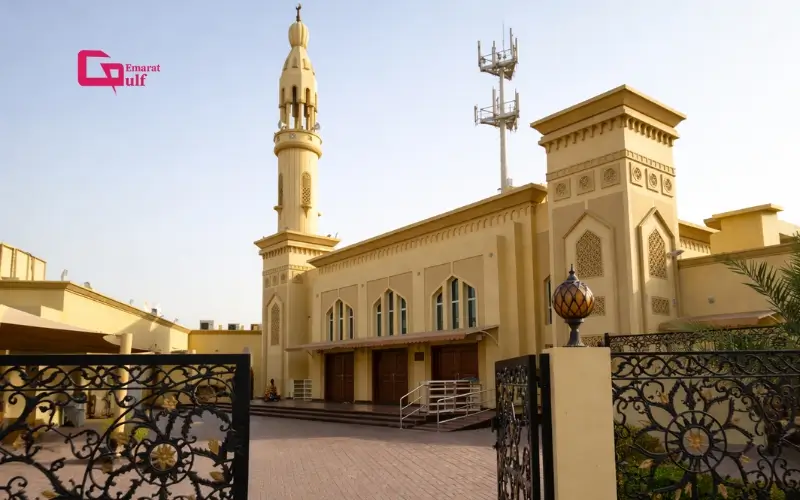
Omar bin Abdul Aziz mosque is a reflection of the Islamic worship style that is founded on simplicity and justice as well as close connection to the community. In contrast to the massive mosques constructed to represent national pride or to show architectural power The identity of this mosque is focused on everyday religious practices, ethics, moral values, and accessibility to the everyday.
Over a variety of regions the mosques that bear this name are typically linked to neighborhoods, instead of tourism. They are places where religion is integrated into everyday life, encouraging prayers, learning and social responsibility without any visual or structural complexities.
Naming Origin and Moral Significance of Omar Bin Abdul Aziz Mosque
Omar Bin Abdul Aziz mosque is named in honor of Caliph Umar ibn Abd al-Aziz, an incredibly revered Islamic leader who was known for his integrity and humility. He also embraced reform. His brief reign left a lasting legacy founded on accountability, justice and a sense of compassion for the everyday people.
Mosques based on his name are typically built to reflect the values in their actual use instead of merely symbolism. The equality of the prayer space, small-scale construction, as well as the service provided to communities around constitute the core of the identity of this mosque. The name itself defines expectations for moral leadership as well as fairness and social responsibility in the mosque community.
This moral connection has a profound impact on how people view the mosque, and how community events are constructed around it.

Practical Overview of Community-Centered Mosque Model
| Aspect | Description |
| Mosque Purpose | Prayers for the day and local worship |
| Design Philosophy | Functional, modest Islamic design |
| Congregation Size | Small to medium |
| Primary Users | Families and residents of the local area |
| Educational Role | The basics of Quran along with Islamic learning |
| Social Function | Assistance and support for the community |
| Location Pattern | Residential neighborhoods |
Architectural Identity Focused on Function
Omar bin Abdul Aziz mosque is built using an architectural style which focuses on practicality over complexity. The architecture avoids ornamentation, while preserving the essential Islamic spatial principles.
The most important architectural features are:
- Simple prayer hall arrangement
- Minimal decorative elements to minimize the amount of distraction
- Natural light to help you relax and focus
- Straight prayer rows
- Effective use of space for attendance on a daily basis
This simplicity helps in spiritual concentration and is a reflection of Islamic principles of the importance of balance and humility.
Daily Worship and Neighborhood Integration
Omar Bin Abdul Aziz Mosque has an ongoing influence on daily rituals of religion. Since it is typically in close proximity to homes, people can go to prayers on a regular basis without any logistical issues.
Worship and community gatherings typically consist of:
- Five daily prayers, with a steady congregation
- Prayers on Friday for residents of the nearby area
- Ramadan prayers and a few Iftar gatherings
- Informational guidance from the church and counseling
- Neighborhood-level coordination of charity
The presence of the Holy Spirit is a constant source of strength for the rituals of faith and builds a sense of community among congregations.
Educational Role and Ethical Development
Education is a vital part of the mosque’s life even if facilities aren’t the most impressive. Many mosques with this name have small-scale activities for education that are focused on the practical understanding of religion.
Children often take part in Quran Recitation classes, while adults can benefit from brief discussions on the issues of daily life. Lessons typically stress honesty, accountability as well as family values and the harmony of society, not abstract concepts.
This method of education aligns with the values of the past that are associated with Umar Ibn Abd al-Aziz. It makes faith a living action rather than a symbol of identity.
Social Support and Community Responsibility
Beyond education and prayer The mosque is often used as a community support center for the local population. Residents may seek help when they are facing personal challenges or financial strain, or concerns about their families.
The charitable activities of the average are moderate, but are regular. Locally-based fundraising, distribution of food and mutual assistance programs ensure social cohesion. These initiatives build trust between people who worship and reinforce the role of the mosque as an anchor for morality and social cohesion.
The involvement of the presence of religious institutions directly contributes to the stability of communities and well-being.
Comparison With Monumental Mosques
Mosques that are community-oriented operate in a different manner in comparison to large landmark structures, like the Sheikh Khalifa bin Zayed Grand Mosque. They are designed to serve huge congregations and draw in international visitors.
The landmark mosques are characterized by their architectural scale, tourist attraction and representation of the nation. Contrastingly, community mosques are characterized by accessibility, consistency and community service. Both serve a vital role However, their mission and functions are different.
This contrast illustrates how Islamic architecture adapts to the social dimensions and the needs of users instead of following a singular model.
Spiritual Atmosphere and Personal Connection
The atmosphere of the spiritual inside Omar bin Abdul aziz mosque is purposefully focused and personal. The soft lighting, the simple materials and a minimal amount of decor create an environment that inspires a sense of humility and focus.
Imams typically maintain close connections with their worshipers, giving advice in addition to sermons. The personal interactions build confidence and strengthen the mosque’s position as a place for moral support, not just the practice of ritual.
Such a setting is especially important for people who are looking for peace and stability in their regular worship.

Accessibility and Inclusive Design
In residential areas, the mosque is generally accessible via walking. This facilitates regular attendance for elderly worshippers or children as well as families.
Layouts are usually simple with entry points on the ground and clear paths. Although facilities can be straightforward however, inclusion remains a key element and ensuring that physical limitations don’t prevent from participating in the religious activities.
This accessibility is a reflection of Islamic principles of inclusivity and responsibility for the community.
Cultural Relevance in Contemporary Society
In contemporary urban settings, Omar bin Abdul Aziz mosque is a prime example of how the influence of religion is not based on size or visibility. The impact is based on the consistency of its teachings, ethics, and its integration into everyday life.
As cities grow and lifestyles get more hectic, community mosques offer continuity and a sense of familiarity. They keep the traditional religious practices as they adapt to contemporary lifestyles, which makes them crucial for sustaining community development.
Closing Reflection
Omar bin Abdul Aziz mosque stands at the core of daily Islamic life. By combining modest architecture with a moral ethos, as well as an incredibly strong integration of the community it plays a vital important role in both modern and traditional societies.
In putting people, prayer and accountability over show The mosque model is able to safeguard Islamic values in an efficient and meaningful way. The significance of this model is not in the way it appears however, but rather in the way it functions with a steady, quiet manner and purposefully.
Related Article: Al Maktoum Airport
Frequently Asked Questions
What kind or mosque do you have? Omar Bin Abdul Aziz Mosque?
It is a mosque that is community-focused. specifically designed for daily prayers along with local gatherings and the basics of Islamic education.
Is this mosque primarily for visitors?
It mostly serves local believers, although guests who are respectful may also attend, based on the local rules.
What distinguishes it from the other famous mosques?
Its main focus is on accessibility, simple and neighborhood services rather than scale of architecture or tourism.
Are there educational opportunities available?
Numerous locations offer Quran education and fundamental religious instruction for both children and adults.
Are they suitable for families?
Yes, it encourages family involvement and social interaction.